Dental prosthetics (prosthodontics)
Dental prosthetics is a branch of dentistry that deals with restoring or replacing damaged or lost tooth tissues, individual teeth, as well as entire dental arches. Prosthetics is classified by service life as permanent or temporary, and by the method of fixation as removable, fixed, and conditionally removable.
Do not postpone prosthetic treatment, as the absence of even a single tooth can lead to health problems: gastrointestinal disorders, malocclusion, pathological tooth wear, and bone tissue atrophy.

When you should see a prosthodontist
A prosthodontist is a dentist who restores teeth and provides prosthetic treatment, restoring both function and aesthetics. It is worth noting that the need to see this specialist may arise even in childhood, for example, due to trauma to the crown part of the tooth, or for the fabrication of a removable denture to preserve the space of a previously lost tooth.
You should see a prosthodontist if you have:
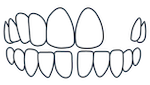
Missing one or several teeth in the dental arch
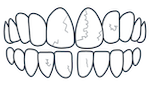
Multiple chips and cracks of the tooth enamel
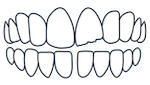
Destruction of the coronal part of the tooth by more than 50%
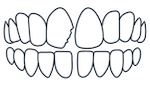
Fracture (chip) of the coronal part of the tooth
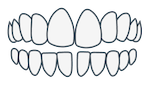
Diastemas/tooth gaps
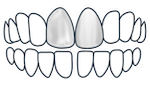
Change in tooth colour
Dental crowns we place at our clinic
Main types of dental prosthetics
Dental crowns
Placement of dental crowns is one of the most common treatments for our patients. Today, it is one of the most durable and reliable ways to restore the coronal part of a tooth. This type of prosthetic restoration (a crown) is used when minimally invasive treatment (for example, restoration with light-cured composite material) is not possible or will not provide the desired result. Crowns are used to change the shape, size, or colour of a tooth, as well as to replace a missing tooth crown.
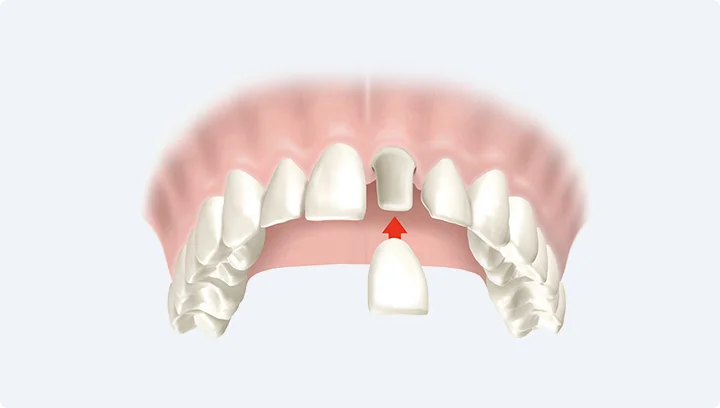
Dental crowns are made from various materials: metal, plastic, composites, ceramics, zirconia (zirconium dioxide), and combinations of these materials (zirconia veneered with ceramics, metal veneered with ceramics, metal veneered with plastic).
Crowns that contain metal are considered technologically outdated, and more and more dentists are moving away from these materials because of their low aesthetic qualities and the risk of allergic reactions to metal. Their main advantage is only their relatively low cost.
All-ceramic and zirconia crowns are modern materials: they are hypoallergenic, highly aesthetic, durable, and do not change colour over time.
Plastic crowns, that is, temporary crowns, are used in cases where the tooth requires long-term treatment before prosthetic restoration, for example, root canal treatment. To avoid disrupting the patient’s usual lifestyle, a temporary prosthesis is offered during the treatment period, which is later replaced with a permanent one.
When restoring a natural tooth, crowns are placed on a prepared (shaped) natural tooth, a core build-up, or a post, depending on the individual clinical situation. Crowns are fabricated either in a dental laboratory by a dental technician based on conventional impressions or digital scans of the patient’s jaws (taking from 10 to 14 days), or, if the clinic has its own digital laboratory, the entire crown fabrication process takes from 30 minutes to 1 day.
Advantages:
- Restoration of aesthetics
- Restoration of tooth function
- High strength
- Biocompatibility (hypoallergenic)
Indications:
- Tooth destruction of more than 50 percent
- Tooth chips and cracks
- Tooth trauma (crown fracture)
- Tooth wear
- Bite correction
- Enamel discolouration
Disadvantages:
- Require special care to ensure long service life
- Relatively high cost
- Tooth preparation (reduction) is necessary
Contraindications:
- Acute periodontitis
- Bruxism
- Low clinical crown height
- Deep bite
Bridge restorations
Bridge restorations are prosthetic constructions that replace one or several adjacent teeth in the dental arch. They have two supports on the sides (either on a natural tooth, a core build-up, or an implant).
The main purpose of such a restoration is to restore function: chewing, speech, and aesthetics. They are made from the same materials as dental crowns.
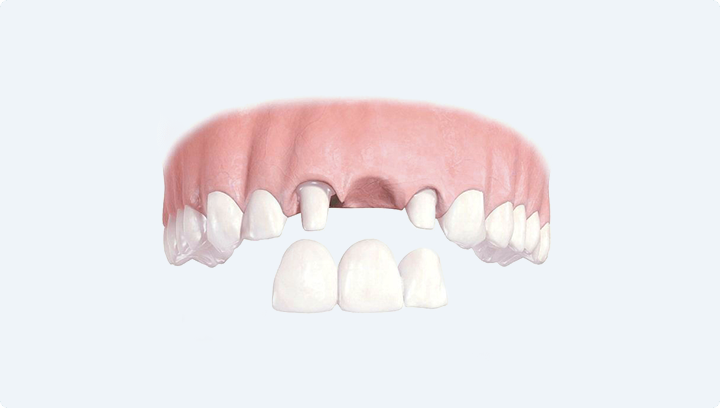

Dental bridges can be considered a more budget-friendly alternative to restoring a tooth with an implant. The main disadvantage of this method is that bone atrophy develops in the area of the missing tooth, which means that over time there will be bone loss and gum recession, and a space will appear between the soft periodontal tissues and the bridge. In this case, the prosthesis will need to be remade, and if the patient later decides to place an implant, the process will take about six months to a year, as additional bone grafting will be required.
The advantage is the treatment time and the relatively affordable cost of the restoration. The fabrication time for a bridge prosthesis ranges from a few hours to two weeks, depending on the clinic’s facilities and the prosthodontist.
Advantages:
- Rapid restoration of tooth function
- Comfort and quick adaptation for the patient
- Anatomical similarity to the natural dental arch
- Reliable fixation of the restoration
- No surgical intervention required
Indications:
- Absence of one or several adjacent teeth in the dental arch
- Restoration of chewing function
- Restoration of speech function
- Restoration of aesthetic function
Disadvantages:
- Requires preparation (reduction) of the natural teeth
- Two supporting teeth on both sides are mandatory
- Bone atrophy in the area of the missing tooth
- Possible chipping or fracture of the restoration under heavy load
Contraindications:
- Acute periodontitis
- Absence of abutment teeth
- Bruxism
- Occlusal (bite) abnormalities
Implant-supported prosthetics
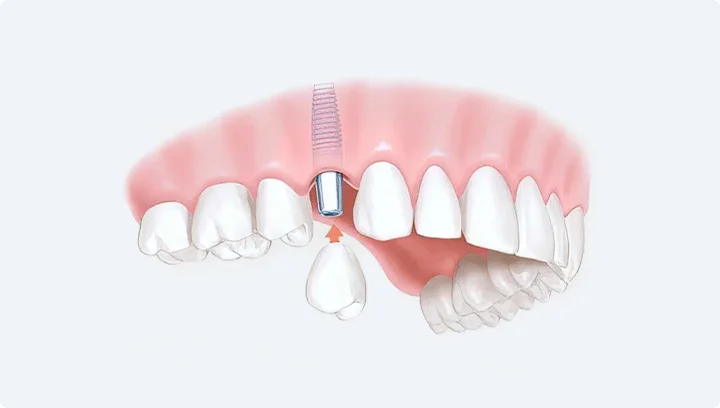
An implant is an artificial titanium tooth root that is usually placed into the alveolar bone surgically. A so-called connector (abutment) is positioned between the implant and the visible part of the tooth (the crown). The prosthetic restoration on implants is carried out on the abutment.
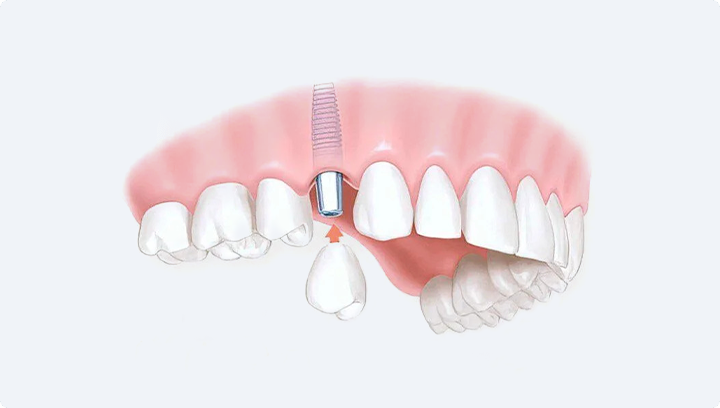
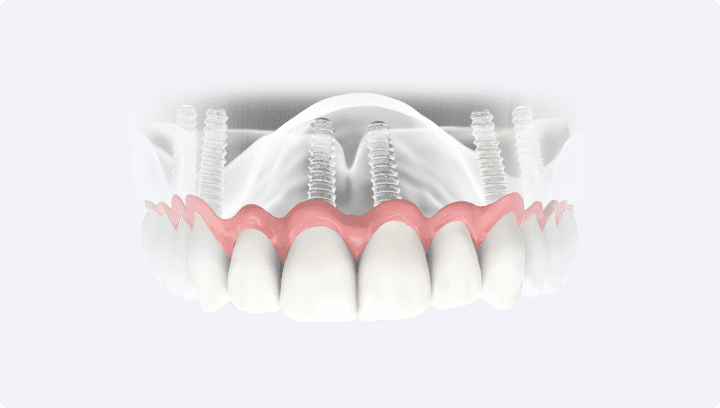
There are various methods of implant-supported prosthetics, and depending on the clinical case and the patient’s needs, it is possible to restore from one to 14 teeth in a dental arch. Implant-based prosthetics can be either fixed or conditionally removable (All-on-4, All-on-6). Most often, fixed implant-supported restorations are used — either dental crowns, bridge restorations, or dentures.
Advantages:
- High aesthetics
- High reliability of the restoration
- Prevention of bone tissue atrophy
- Good cost-to-service-life ratio
Indications:
- Absence of one or several teeth in the dental arch
- Complete edentulism (absence of all teeth)
- Impossibility of removable prosthetic treatment
- Need for tooth extraction
Disadvantages:
- Presence of possible contraindications
- Need for surgical intervention
- Postoperative rehabilitation period is required
- Need for special care of the implant
Contraindications:
There are no specific contraindications to implant-supported prosthetics itself; there are only contraindications to dental implantation. When planning the surgery, the dentist takes into account the final prosthetic result, and if they decide that implantation is possible, implant-supported prosthetic treatment is indicated for the patient.
Removable dentures
Removable dentures help patients restore multiple missing teeth or a completely toothless arch. This is a relatively economical method of restoring chewing function that does not require surgical intervention. Removable dentures consist of a base and artificial dental crowns fixed onto it.
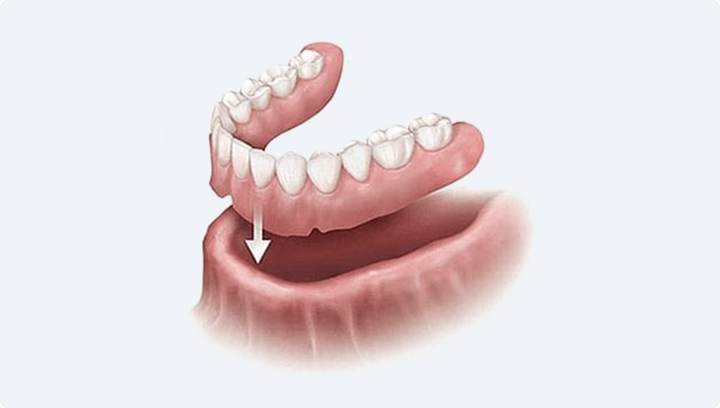
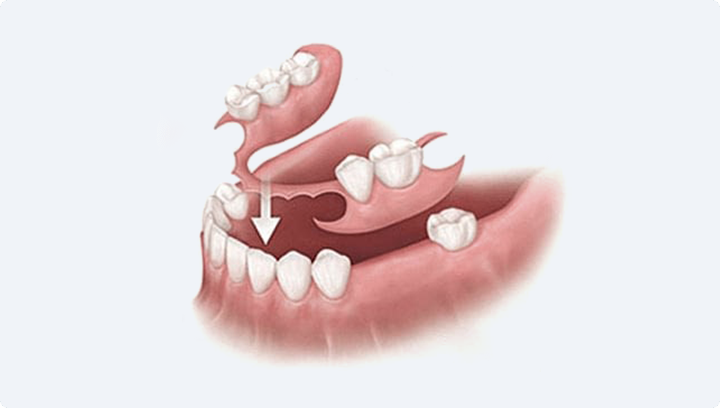
The average service life of removable dentures is about 5 years. This relative lack of longevity is due to the fact that bone atrophy develops in the areas where teeth are missing, and over time the denture no longer fits tightly. Because of poor contact with the palate, the denture becomes unstable and may fall out, and in some cases even break, as the load on it is distributed unevenly. Removable dentures are fabricated by dental technicians in a laboratory based on jaw impressions or digital scans taken by the prosthodontist in the clinic. The fabrication time ranges from 1 day to 2 weeks.
Advantages:
- Relatively affordable cost
- No surgical intervention required
- Rapid restoration of chewing function
- Practically no contraindications
- No need to prepare (reduce) natural teeth
- Can be used in cases of complete edentulism
Indications:
- Impossibility of dental implantation
- Multiple or complete edentulism
- Periodontitis
Disadvantages:
- Limited service life of the restoration
- Bulky construction
- Possible speech impairment
- Dietary restrictions and food impaction
- Lower aesthetic outcome compared with other prosthetic options
Contraindications:
- Allergic reaction to the material
- Increased gag reflex
- Mental disorders
Fixed dental prostheses
Fixed dental prostheses can replace partial or complete absence of teeth. As supports, they can rely either on prepared (shaped) natural teeth or on dental implants.

The advantage over removable prosthetics lies in the size of the restoration (it is smaller than removable or conditionally removable dentures). Therefore, the aesthetic outcome is better, as is the level of comfort for the patient.
Micro-prosthetics (inlays, onlays, veneers, and lumineers)
Micro-prosthetics is a method that allows the functional and/or aesthetic function of a tooth to be restored without using full prosthetic restorations. It is used in cases of partial destruction of the natural tooth.

Inlays
This is a micro-prosthesis that replaces the destroyed part of the tooth crown and is an alternative to a dental filling when more than 30 percent of the tooth is damaged. The inlay is fixed with adhesive cement and is fabricated in a dental laboratory. Materials used include metal, ceramic, and zirconia. Inlays are used to cover the occlusal (chewing) surface and fissures (cusps).
Onlays
Onlays, unlike inlays, are used to restore the entire chewing surface of the tooth crown. They have the same indications as dental inlays. Depending on the area of the crown that is affected, either inlays or onlays are used.
Adhesive prostheses
An adhesive prosthesis or adhesive bridge is similar to a conventional bridge, but the method of fixation to the supporting teeth is different. While a traditional bridge is placed over prepared tooth crowns, an adhesive bridge is fixed to the sides of these teeth using a special pre-fabricated plate (an occlusal wing) attached to the tooth surface.
On the one hand, this method of fixation makes it possible to restore even a single missing tooth without preparing (reducing) the neighbouring natural teeth, avoiding implantation and reducing material costs, as only one crown is needed rather than three (one to replace the missing tooth in the centre and two abutment crowns on the sides).
On the other hand, this type of restoration is less reliable, especially in the area of chewing teeth, and is often used as a temporary solution to a defect. The average service life of such restorations is 5 to 10 years, depending on the patient’s lifestyle, oral hygiene, and the site of prosthesis placement.
Veneers
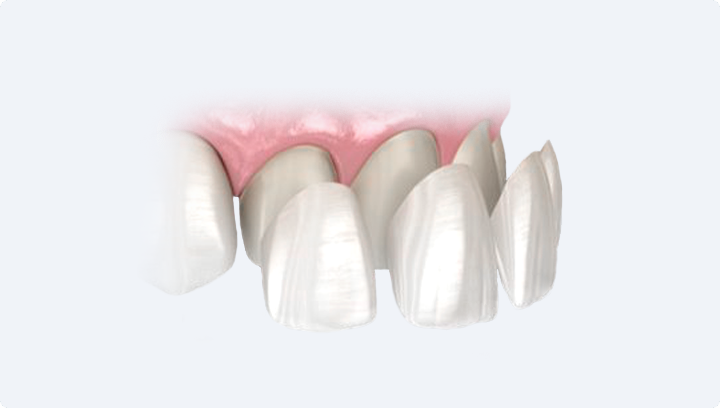
A veneer is a thin shell that is bonded to the front surface of a tooth. Veneers are made of ceramic or zirconia. They are used to correct tooth discolouration, enamel or tooth chipping, minor defects in tooth shape or position, or to create a “Hollywood smile”.
The main disadvantages of veneers are:
- first, natural teeth must be prepared (reduced) for their placement
- second, because of this, you should understand that veneers are a lifelong solution
The perfect, magazine-cover smile that patients obtain after veneer placement most often outweighs all the disadvantages of the procedure. This is a way to achieve the smile of your dreams by correcting the shape and colour of your teeth.
Lumineers
Lumineers differ from veneers only in their thickness. As a result, their scope of use is narrower compared with veneers. Lumineers require less tooth reduction than veneers. While the thickness of a veneer is up to 500 microns, a lumineer is about 300 microns. Lumineers are usually used to create an attractive smile when there are no significant pathologies of the dental arch. They cannot be used when major correction of tooth shape is needed, when tooth position in the arch is significantly disturbed, or when tooth integrity is compromised.
The main function of lumineers is to correct tooth colour and to make minor adjustments to the overall shape of the dental arch. As a rule, lumineers are more expensive. There are also so-called ultraneers. These restorations are even thinner and are used primarily for colour correction of the teeth; their cost is usually higher than that of lumineers.
Indications:
- Wedge-shaped defects
- Fluorosis
- Enamel necrosis
- Tetracycline-stained teeth
Advantages:
- High strength of the restorations
- High similarity to natural teeth
- Long service life
- Help prevent the development of caries
- Do not become discoloured by food or lifestyle habits
Contraindications:
- Occlusal abnormalities (deep bite)
- Multiple carious lesions
- Acute periodontitis
- Mental disorders
Disadvantages:
- Relatively high cost
What influences the cost of prosthetic treatment
Several factors influence the cost of prosthetic treatment:
- Firstly, the material of the restoration. A metal-ceramic crown will cost 1.5–2 times less than a zirconia or all-ceramic crown.
- The number of restorations being fabricated directly affects the total cost.
- The type of prosthetic treatment also matters. For example, a removable denture will be the most budget-friendly solution for replacing several missing teeth. Next, in terms of increasing cost, comes a fixed dental prosthesis, and the most expensive, yet the most durable and aesthetic option will be a bridge restoration.
The clinic’s pricing policy is also an important factor in the final cost of treatment. It is important to understand that the latest technologies and high-quality materials cannot be cheap.
In more budget-oriented clinics, guarantees for completed work are often not provided, and if they are, the wording may be quite vague, making it difficult to insist on replacement of a dental prosthesis under warranty. The choice is yours — whether you are prepared, if necessary, to “pay twice.”
Advantages of treatment at our clinic
In-house laboratory

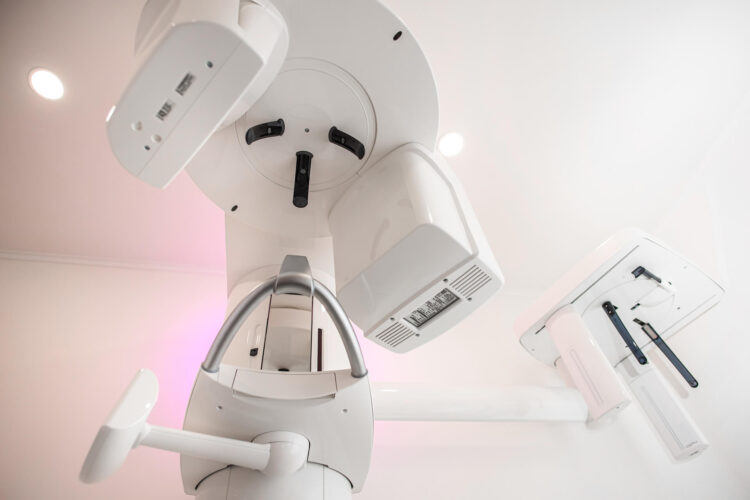
CT scanner
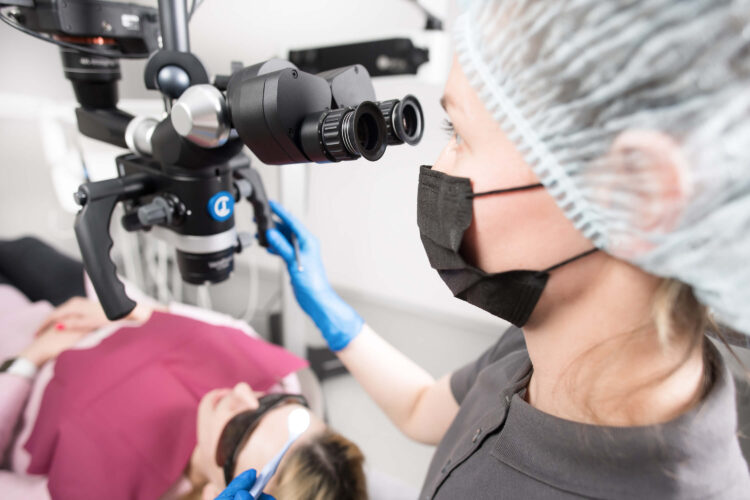
Dental microscope
Dental milling unit

Cost of dental crowns
Digital tooth impression
800 UAH
Temporary dental crown
3 000 UAH
Metal-ceramic dental crown
12 500 UAH
Anatomical ceramic dental crown
26 500 UAH
Anatomical ceramic dental crown
26 500 UAH
Veneer, lumineer
26 500 UAH
Payment
We have no hidden charges. Payment is made according to the price list and the agreed treatment plan.
You can pay in cash or by card (via a bank terminal).
You can also receive treatment under an insurance case through an insurance company, or under a contract with another company.
Warranty
All ceramic dental crowns we fabricate are covered by a 3-year warranty, provided that the rules of use and the dentist’s recommendations are followed. You can read the warranty terms in the “Warranties” section.
Clinic locations in Kyiv
The most convenient access to our dental clinics is from the following districts of Kyiv:
To the clinic at Kyiv, 25B Novomostytska St. – Vinogradar, Kurenivka, Obolon, Syrets, and Minskyi residential area.
To the clinic at Kyiv, 20 Pidvysotskoho St. – Pecherskyi district, Zvirynetska metro station.
To the clinic at Kyiv, 60/1 Yalynkova St. – Kharkivskyi residential area, Boryspilska, Chervony Khutir, Vyrlytsia, and Kharkivska metro stations.

Dentist Maksym Makarenko
Placement of dental crowns, veneers, inlays, bridges, and other prosthetic restorations is performed by dental surgeon Maksym Makarenko.
He has 22 years of clinical experience.
Since 2003, he has been continuously advancing his qualifications in surgical dentistry, implantology, prosthetics, and periodontology.
- Doctor of Sciences
- Member of the Ukrainian Association of Digital Dental Technologies
- Member of the Association of Implantologists of Ukraine
- Member of the International Team for Implantology (ITI)
- Member of the Association of Periodontists of Ukraine
Reviews about the doctor

Лікувався у Миколи Горєлиха. Спочатку трохи напружувався як і всі нормальні люди перед стоматологом), але після перших хвилин стало зрозуміло, що лікар спокійний, пояснює без розумних слів і робить все акуратно.
Лікування зуба було під мікроскопом, раніше думав, що це більше маркетинг, але різниця відчувається. Все без відчуття на око щось роблять.Поставили пломбу, виглядає як свій зуб, нічого не заважає.
Також зробив професійну чистку зубів без болю, без цього жахливого скреготу по душі, після процедури реально відчуття чистоти, як після хорошої гігієни, тільки в рази краще.
Стоматологія приємна і затишна: обладнання, нормальна атмосфера без лікарняного стресу. Персонал привітний, без нав’язування зайвих процедур це окремий плюс.
Якщо шукати стоматологію на Бориспільській або Харківському масиві можу спокійно рекомендувати цю. Тут роблять якісне лікування зубів, нормальну профчистку і не створюють відчуття, що ти прийшов на чек.

Після його лікування завжди зуби в порядку якщо дотримуватися рекомендацій👍🏼


Саме видалення пройшло швидко та практично безболісно. Після процедури отримала чіткі рекомендації щодо догляду, і відновлення проходить добре.
Олена Ярославівна — уважний, компетентний та дуже приємний лікар. Дякую за турботу та професіоналізм! Рекомендую клініку від щирого серця.
💕


Тут працюють справжні професіонали своєї справи — уважні, ввічливі, делікатні та надзвичайно відповідальні. Кожен спеціаліст робить свою роботу на найвищому рівні, з турботою про пацієнта та щирим бажанням подарувати красиву, здорову посмішку.
Але найцінніше — це атмосфера. Тут не просто лікують зуби, тут повертають впевненість у собі та дарують гарний настрій. Після кожного візиту виходиш із посмішкою — і не лише завдяки чудовому результату, а й завдяки людяному ставленню.
Я безмежно щаслива, що потрапила саме сюди. І шкодую лише про одне — що не зробила цього раніше. Бо тут можуть зробити навіть краще, ніж ти очікуєш.
Дякую за професіоналізм, турботу і красу, яку ви даруєте людям щодня! 💛


Так я потрапила на консультацію до лікаря Макаренка Євгена Геннадійовича. Він уважно роздивився моє КТ і призначив лікування.
Клініка і кабінети оснащені сучасною технікою, використовуються передові технології лікування із застосуванням найновіших матеріалів.
А головне, високий професіоналізм і уважне відношення до пацієнта. Євген Геннадійович має золоті руки , чітко і впевнено виконує операції, дарує пацієнту естетичне і моральне задоволення від лікування. Мені здається він пропонує найкраще і на 100% правильне рішення проблеми пацієнта.
Я задоволена, що довірила свої зуби саме цій клініці, саме Євгену Геннадійовичу, щиро дякую йому і всьому колективу за чутливе ставлення і розуміння.
Сподіваюсь, продовжуючи лікування отримаю красиву посмішку і велике задоволення від результату.


Дякую за професіональний підхід і прийнятні ціни


В мене були як прості процедури, наприклад чистка зубного каменю або видалення карієсу та пломбування, так і видалення шостого зубу зверху разом з кістами, які сформувалися в десні з наступним встановленням імпланту.
Компетентність лікарів на всіх етапах була на вищому рівні, до того ж вони завжди були готові обговорити будь-яке питання, яке в мене виникало.
Матеріали, які використовуються, також чудової якості.
До того ж, весь персонал кліники людяний і емпатичний, що додає спокою і відчуття комфорту.


Дуже уважний і позитивний лікар, усе пояснює, працює акуратно й спокійно.
Ну і атмосфера в клініці приємна, відразу відчувається турбота про пацієнтів.
А антураж просто вау: павуки, павутиння, гарбузики, скелети — весело і затишно.
Йти до стоматолога ще ніколи не було так спокійно!
Рекомендую тим, хто шукає нормального, чесного стоматолога без пафосу.

Сервіс на висоті!!!
Дуже вдячна за Вашу працю!!!


А сьогодні взагалі щастя , бо трошки боюсь анастезіі, і ми без проблем ( без болю) пролікували 2 зуба без анастезіі.
Я дуже рада бути пацієнтом Стоматології Максима Макаренко !
Я вдячна цій команді за їхній швидкий розвиток, професіоналізм і за те, що з вами безпечно! Дуже рекомендую !
Our doctors’ work

What is periodontitis and how is it treated?
In this article, we will talk about what periodontitis is, what are the signs of this disease, why it is...

Complications after tooth extraction
Complications may occur after tooth extraction. For example, the jaw may hurt, edema may appear, the cheek may swell, and...

Dental crowns. Which are better?
Dental crown is a fixed prosthesis which is used in more than 50% of teeth destruction cases to return the...
Frequently asked questions about dental prosthetics
What is the difference between an inlay and a filling?
A ceramic inlay is stronger than a filling and has a lower wear rate. It used to be thought that inlays were also more aesthetic than dental fillings, but modern light-cured composite restorative materials also have a very high aesthetic appearance.
Which bridge is better: ceramic or zirconia?
Our specialists recommend zirconia bridge restorations, as this material is the most durable and stronger than conventional ceramics.
What are the risks of tooth preparation?
The main drawback of this procedure is that the protective layer of the tooth — the enamel — is removed. As a result, the dentine becomes very vulnerable. Such teeth must not only always be covered with prosthetic restorations, but this must also be done to a high and reliable standard.
How long do veneers last?
It all depends on how well you care for your oral hygiene. Veneers typically last 10 years or more. We have patients who have been wearing ceramic veneers for 15 years.
Which is better: a bridge or an implant-supported crown?
If you look at it from a long-term perspective and think about the future, then implantation will be the best solution, provided there are no contraindications and the patient is ready for the procedure. The point is that an implant helps prevent bone loss in the area of the missing tooth, whereas under a bridge, bone atrophy will progress. Over time, a “dip” forms under the bridge, and the restoration will need to be replaced, or you will have to undergo bone grafting and dental implantation.