Why are veneers needed?
Dental veneers are very thin, non-removable ceramic or composite laminates, no more than 500 microns (0.5 mm) thick, used to restore teeth in the “smile zone”. They cover four surfaces of the tooth: the vestibular (labial) surface, the proximal surfaces and the incisal edge.
Veneers are micro-prosthetic restorations in prosthetic dentistry (prosthodontics) and are used to correct tooth colour and shape or to restore minor defects (chips, enamel cracks).

Indications for veneer placement

Diastemas / gaps between teeth
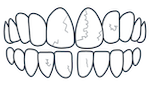
Chips / cracks in the tooth enamel
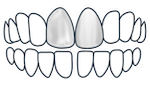
Tooth discoloration

Crowding / misalignment of teeth
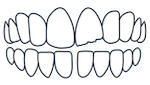
Abnormal tooth shape

Uneven tooth surface
Main types of veneers
Veneers differ in their manufacturing technique, the materials used to make them, and the method of placement. Below we will look at the main methods of veneer fabrication.
Direct veneers — fabricated by the direct technique, directly in the patient’s oral cavity. The dentist prepares the tooth, isolates it with a rubber dam system, and applies a composite material.
Veneers on a refractory model — the dentist takes impressions of the jaws with the prepared teeth. A model of the teeth is then made from a refractory material. Ceramic is layered onto this model by a dental technician and fired in a special furnace.
Pressed veneers — the dentist takes impressions of the jaws and obtains a model of the teeth. On this model, the dental technician waxes up the veneers. The wax is then burnt out and replaced with pressed ceramic; the entire process takes place under pressure at high temperatures (about 700–800 degrees Celsius).
Milled veneers. Fabricated on a milling unit; the veneer itself is produced without the need for a dental technician. First, the dentist performs 3D scanning of the jaws, after which the shape of the future veneer is designed on a computer. The computer then sends commands to the milling unit, which fabricates the prosthetic restoration from a special blank in the form of a disc or a small block.
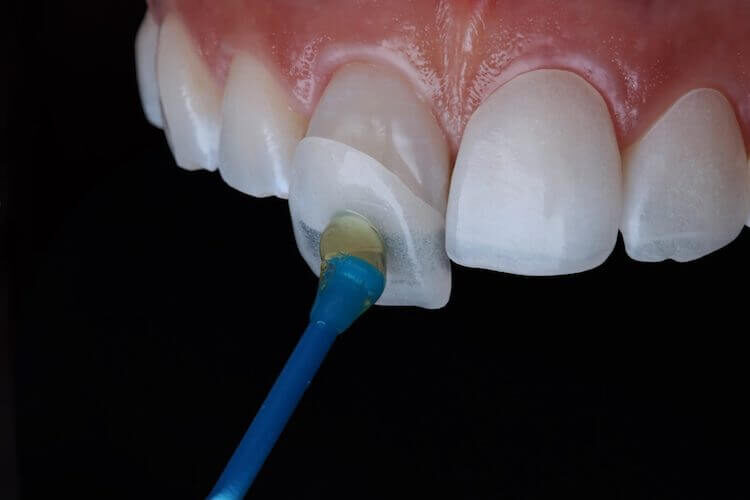
Ceramic (indirect)
Advantages:
- Biocompatibility
- Painless placement
- Wear resistance (color stability)
Disadvantages:
- Several visits to the dentist are required
- Higher cost compared with composite alternatives
- To place them, tooth preparation (reduction) is required

Composite (direct, indirect)
Advantages
- Relatively affordable cost of veneers
- Can be fabricated in a single visit using the direct technique
Disadvantages
- Shorter service life compared with ceramic veneers
- Certain colour changes occur over time
- Surface roughness develops during use
- Require prior tooth preparation
Types of veneers by material used

Ceramic veneers
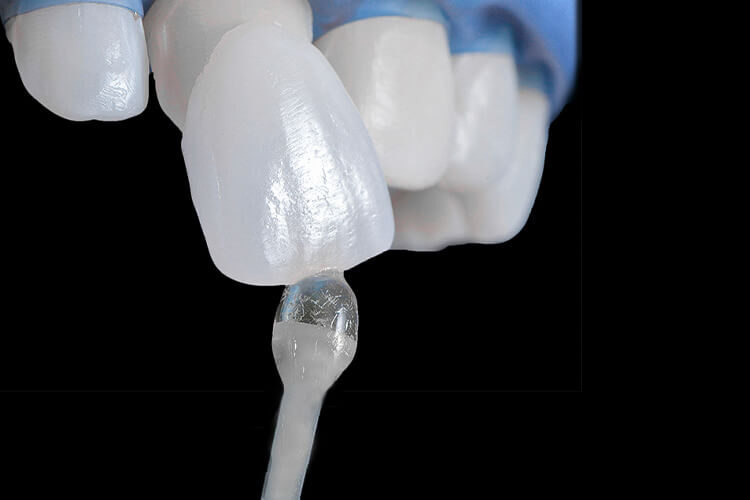
Feldspathic ceramic veneers

E-max glass-ceramic veneers

Zirconia (zirconium dioxide) veneers

Direct composite veneers

Lumineers

Indirect composite veneers

Ceramic-composite veneers
Veneer placement process
The examination
X-ray diagnostics and medical history taking
Professional teeth cleaning
Oral sanitation
3D scanning
3D model fabrication
Mock-up try-in
Tooth preparation
Taking impressions
Digital design
Veneer fabrication
Placement and bonding of veneers
Key recommendations for choosing veneers
So, ceramic veneers are more aesthetic and longer-lasting than composite ones. It is important to choose a dentist you trust and a clinic that offers good warranty conditions for the long-term maintenance of your veneers.
Remember that veneers are a permanent, irreversible treatment: yes, you will be able to replace them or change their colour and shape, but you will no longer be able to be without veneers or crowns (because of prior tooth preparation).
One more important point: do not ignore your dentist’s recommendation to have a mock-up try-in. It will only slightly increase the overall cost of treatment, but only thanks to this preliminary try-in can you achieve exactly the result you are hoping for.
Possible complications after veneer placement
- Increased tooth sensitivity (up to 14 days)
- Sensation of pressure or fullness (up to 3 days)
- Pain caused by excessive tooth enamel preparation
- Progression of previously untreated caries (pulpitis)
- Veneer debonding (detachment)
- Veneer chipping
Care for veneers
Additional oral hygiene. We recommend using an oral irrigator when cleaning your teeth and dental floss after meals. This is necessary to thoroughly remove food debris and prevent it from entering the micro-gap under the veneer or under the gums.
Regular professional hygiene. For the long-term service of veneers and for maintaining oral health, we recommend professional dental cleaning and a check-up every six months. During these visits, the dentist can detect any diseases at an early stage (if they occur) and treat them with minimal intervention.
Use of soft toothbrushes and low-abrasive toothpastes. The veneers themselves should be cleaned with a soft-bristled toothbrush to avoid scratching their surface. The same applies to toothpastes.
Caution with food. Try not to overload the front teeth by biting into hard foods; instead, shift the chewing load to the posterior, chewing teeth.
Lifespan of veneers
The average lifespan of ceramic veneers is 10–15 years. This depends on the materials selected, the quality of the clinical and laboratory work, how well the veneers are cared for, and the patient’s general health and individual characteristics. Over time, veneers need to be replaced. As a rule, this is due either to overall wear, which negatively affects aesthetics, or to changes in the gingival margin (gum recession) that occur with age.
As for composite veneers, their service life is usually around 3–5 years. Again, everything depends on how they are used and maintained. Composite veneers tend to pick up staining from food colourants and gradually become dull. Among our prosthodontist’s patients there are cases where composite veneers have lasted 7–10 years, but this is more the exception than the rule. Achieving such results requires very careful home care, a healthy lifestyle, and changes in dietary habits.
Alternatives to dental veneers
Composite veneers. Composite veneers can replace conventional ceramic veneers and in some cases are an excellent alternative. For example, if aesthetic correction is needed for one or several individual teeth rather than the entire arch, composite veneers can address the patient’s concern. Furthermore, they are suitable when the budget is limited but a white smile is desired, as their fabrication and placement are approximately three times less expensive than ceramic veneers.
Dental crowns. If there is not enough tooth structure to place a veneer, the dentist will recommend a ceramic crown to restore the function and aesthetics of the tooth.

Full-mouth restoration with veneers
A patient came to us with a request to restore teeth that had been damaged after pregnancy. During the examination, we identified secondary edentulism and the absence of teeth 6 and 7 in the lower jaw. Two teeth 5 were also missing in the upper jaw.
The patient had been without these teeth for a long time, so the opposing teeth had overerupted: the upper teeth were almost touching the gums of the lower jaw. You can see how we solved this case in the video.

Hollywood smile with veneers
The patient came to our clinic with aesthetic concerns in the smile zone (irregular tooth shape and yellow tooth colour). After the initial consultation, we recommended treatment with aligners (clear trays) as a comprehensive way to correct all these issues, align the rotated teeth, and thereby avoid extensive tooth reduction during veneer placement.
Cost of veneers
Digital tooth impression
800 UAH
Creation of a digital tooth impression. Price per projection.
Veneer, lumineer
26 500 UAH
Fabrication of a veneer with maximum similarity to a natural tooth. Made of aluminium oxide on Sirona automated milling equipment. Fabrication within a single visit (1 hour).
Payment
We have no hidden charges. Payment is made according to the price list and the agreed treatment plan.
You can pay in cash or by card (via bank terminal).
You can also receive treatment under an insurance case through your insurance company, or under a contract with another company.
Warranty
All dental veneers we fabricate are covered by a 3-year warranty, provided that the rules of use and the dentist’s recommendations are followed. You can read the warranty terms in the “Warranty” section.

Dentist Maksym Makarenko
Placement of veneers, lumineers and other prosthetic restorations is performed by dental surgeon Maksym Makarenko.
Clinical experience – 22 years.
Since 2003 and up to now, he has been continuously advancing his qualifications in surgical dentistry, implantology, prosthodontics and periodontology.
- Doctor of Sciences
- Member of the Ukrainian Association of Digital Dental Technologies
- Member of the Association of Implantologists of Ukraine
- Member of the International Team for Implantology (ITI)
- Member of the Association of Periodontists of Ukraine
Patient reviews

Лікувався у Миколи Горєлиха. Спочатку трохи напружувався як і всі нормальні люди перед стоматологом), але після перших хвилин стало зрозуміло, що лікар спокійний, пояснює без розумних слів і робить все акуратно.
Лікування зуба було під мікроскопом, раніше думав, що це більше маркетинг, але різниця відчувається. Все без відчуття на око щось роблять.Поставили пломбу, виглядає як свій зуб, нічого не заважає.
Також зробив професійну чистку зубів без болю, без цього жахливого скреготу по душі, після процедури реально відчуття чистоти, як після хорошої гігієни, тільки в рази краще.
Стоматологія приємна і затишна: обладнання, нормальна атмосфера без лікарняного стресу. Персонал привітний, без нав’язування зайвих процедур це окремий плюс.
Якщо шукати стоматологію на Бориспільській або Харківському масиві можу спокійно рекомендувати цю. Тут роблять якісне лікування зубів, нормальну профчистку і не створюють відчуття, що ти прийшов на чек.

Після його лікування завжди зуби в порядку якщо дотримуватися рекомендацій👍🏼


Саме видалення пройшло швидко та практично безболісно. Після процедури отримала чіткі рекомендації щодо догляду, і відновлення проходить добре.
Олена Ярославівна — уважний, компетентний та дуже приємний лікар. Дякую за турботу та професіоналізм! Рекомендую клініку від щирого серця.
💕


Тут працюють справжні професіонали своєї справи — уважні, ввічливі, делікатні та надзвичайно відповідальні. Кожен спеціаліст робить свою роботу на найвищому рівні, з турботою про пацієнта та щирим бажанням подарувати красиву, здорову посмішку.
Але найцінніше — це атмосфера. Тут не просто лікують зуби, тут повертають впевненість у собі та дарують гарний настрій. Після кожного візиту виходиш із посмішкою — і не лише завдяки чудовому результату, а й завдяки людяному ставленню.
Я безмежно щаслива, що потрапила саме сюди. І шкодую лише про одне — що не зробила цього раніше. Бо тут можуть зробити навіть краще, ніж ти очікуєш.
Дякую за професіоналізм, турботу і красу, яку ви даруєте людям щодня! 💛


Так я потрапила на консультацію до лікаря Макаренка Євгена Геннадійовича. Він уважно роздивився моє КТ і призначив лікування.
Клініка і кабінети оснащені сучасною технікою, використовуються передові технології лікування із застосуванням найновіших матеріалів.
А головне, високий професіоналізм і уважне відношення до пацієнта. Євген Геннадійович має золоті руки , чітко і впевнено виконує операції, дарує пацієнту естетичне і моральне задоволення від лікування. Мені здається він пропонує найкраще і на 100% правильне рішення проблеми пацієнта.
Я задоволена, що довірила свої зуби саме цій клініці, саме Євгену Геннадійовичу, щиро дякую йому і всьому колективу за чутливе ставлення і розуміння.
Сподіваюсь, продовжуючи лікування отримаю красиву посмішку і велике задоволення від результату.


Дякую за професіональний підхід і прийнятні ціни


В мене були як прості процедури, наприклад чистка зубного каменю або видалення карієсу та пломбування, так і видалення шостого зубу зверху разом з кістами, які сформувалися в десні з наступним встановленням імпланту.
Компетентність лікарів на всіх етапах була на вищому рівні, до того ж вони завжди були готові обговорити будь-яке питання, яке в мене виникало.
Матеріали, які використовуються, також чудової якості.
До того ж, весь персонал кліники людяний і емпатичний, що додає спокою і відчуття комфорту.


Дуже уважний і позитивний лікар, усе пояснює, працює акуратно й спокійно.
Ну і атмосфера в клініці приємна, відразу відчувається турбота про пацієнтів.
А антураж просто вау: павуки, павутиння, гарбузики, скелети — весело і затишно.
Йти до стоматолога ще ніколи не було так спокійно!
Рекомендую тим, хто шукає нормального, чесного стоматолога без пафосу.

Сервіс на висоті!!!
Дуже вдячна за Вашу працю!!!


А сьогодні взагалі щастя , бо трошки боюсь анастезіі, і ми без проблем ( без болю) пролікували 2 зуба без анастезіі.
Я дуже рада бути пацієнтом Стоматології Максима Макаренко !
Я вдячна цій команді за їхній швидкий розвиток, професіоналізм і за те, що з вами безпечно! Дуже рекомендую !
Our doctors’ work

What is periodontitis and how is it treated?
In this article, we will talk about what periodontitis is, what are the signs of this disease, why it is...

Complications after tooth extraction
Complications may occur after tooth extraction. For example, the jaw may hurt, edema may appear, the cheek may swell, and...

Dental crowns. Which are better?
Dental crown is a fixed prosthesis which is used in more than 50% of teeth destruction cases to return the...
Advantages of dental prosthetics in our clinic

In-house laboratory
An in-house digital dental CAD/CAM Cerec laboratory for the fabrication of dental crowns, inlays/onlays, veneers and bridge prostheses. We work without intermediaries, which significantly reduces the cost and the time required for prosthetic treatment.
Own CT scanner
Our clinic is equipped with a modern dental CT scanner, Dentsply Sirona Orthophos, which enables us to perform precise X-ray diagnostics and detailed treatment planning before prosthetic restoration.
Dental microscope
In many cases, root canal treatment is required before prosthetic restoration. Working on the root canals under a dental microscope is not only convenient for the dentist, but also guarantees a high-quality result for the patient.
Dental milling unit
A single prosthetic restoration is fabricated in 7 to 30 minutes with high anatomical accuracy. Because the dentist sees the patient in person, they can design a restoration that is as close as possible to the natural teeth in colour and shape.Frequently asked questions about veneers
Do veneers damage teeth?
It would be incorrect to say that veneer placement is a completely risk-free method of tooth restoration, because this procedure involves altering the integrity of the tooth tissues and removing its protective layer (tooth enamel).
However, when veneers are properly planned and placed, the risk of damage to the natural tooth does not exceed the risk without veneers and, in some cases, may even be lower.
Can veneers be placed without tooth preparation?
No, veneers cannot be placed without reducing the tooth structure.
Even though a veneer is very thin, it will protrude from the dental arch if the tooth is not prepared (reduced) beforehand.
Do veneers cause discomfort?
Veneers do not cause any discomfort for the patient. In cases where the entire shape of the dental arch is corrected, there is an adaptation period that usually lasts a few days.
What should I do if decay develops under a veneer?
It is important to detect carious lesions in time and treat the tooth; after that, the veneer can be re-bonded. This is why we recommend visiting your dentist twice a year: over a six-month period, significant destruction usually does not have time to develop, even if caries is present.
If the tooth becomes severely damaged, it may no longer be possible to place a veneer on it again, and you will then need either composite veneers or a dental crown.
Will my veneers darken if I drink a lot of coffee?
The veneers themselves, like dental crowns, do not lose their colour under the influence of nicotine, caffeine or other staining agents. Over time, plaque may appear, which can be removed with professional oral hygiene.
If we are talking about composite veneers, then yes — over time (after about 4–5 years of use) the composite material becomes dull, and the teeth will need aesthetic retreatment.
Are there any dietary restrictions?
There are no specific dietary restrictions. However, you should remember that although veneers are made of strong materials, they can chip just like natural teeth. Therefore, attempts to open metal caps (for example, bottle caps) with your teeth or to crack unopened nuts are very likely to damage both ceramic and composite veneers.