

When does a tooth need to be removed?
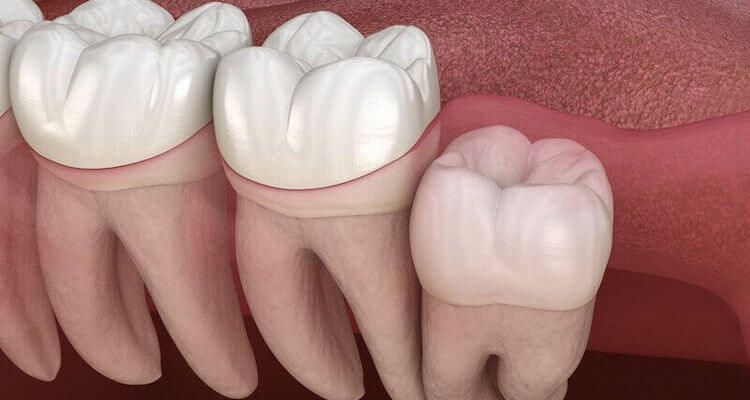
The human body is not perfect, and unfortunately there are cases when teeth need to be removed. This is usually related either to the condition of the tooth itself (when treatment is no longer effective) or to situations where the tooth harms other teeth, for example when wisdom teeth are positioned abnormally.
Today, there are methods and protocols that allow tooth extraction to be performed with minimal trauma, and modern anesthesia techniques help keep patient discomfort to a minimum.

Indications for Tooth Extraction
Tooth extractions may be planned or emergency procedures.
Planned procedures include cases where the patient has been under observation for some time, has undergone certain treatment, or is planning to begin treatment that requires tooth extraction. Such procedures can be planned in advance, the optimal anesthesia method can be selected, comprehensive diagnostics can be performed, and the patient can be prepared for certain limitations during the surgery and recovery period.
Emergency extractions are those performed when a patient seeks urgent care and the tooth must be removed immediately. As a rule, these are purulent infectious processes affecting the tooth. In such cases, the only available diagnostic method is an X-ray examination. It is important to remember that in most cases, emergency extraction can be avoided with timely treatment and regular dental check-ups.
Indications for Emergency Tooth Extraction:
- Osteomyelitis
- Exacerbation of chronic periodontitis
- Periostitis
- Abscess
- Sinusitis
- Jaw fracture in the area of the tooth
- Phlegmon
- Lymphadenitis
- Perimandibular abscess
- Ameloblastoma and other purulent bone lesions
Indications for Planned Tooth Extraction:
- Abnormally positioned wisdom teeth
- Supernumerary teeth
- Incurable granulomatous periodontitis
- Perforation of the tooth root canals
- Grade III tooth mobility
- Creating space for stable prosthesis fixation
- Destruction of the tooth that makes conservative restoration of its function impossible
- Retained baby tooth in adulthood
- A temporary tooth that interferes with eruption of a permanent tooth
Types of Tooth Extraction

Simple Tooth Extraction
A simple tooth extraction is planned in advance by the doctor and the patient. Such a procedure must have clear indications identified at the diagnostic stage. The doctor performs an X-ray examination, analyzes the results, and collects information about the patient’s overall health, medications being taken, and other relevant factors.
Before the procedure, the patient undergoes oral hygiene treatment to reduce inflammation and lower the risk of postoperative complications caused by infection. Before the extraction, the area around the tooth is numbed, the surgeon checks whether the anesthetic has taken effect, and then begins the procedure. The tooth is loosened with a special instrument called an elevator / luxator, after which surgical forceps are applied and the tooth is removed from the alveolar bone. The patient rinses the mouth with an antiseptic, and the doctor places a sterile gauze pad in the socket to stop the bleeding.

Complex Tooth Extraction
Complex extraction refers to a procedure in which instruments and equipment not typically used for standard extraction are required during the operation: burs for cutting bone, scalpels, suture material, a piezotome, a laser, and more.
As a rule, patients are prepared for complex extraction in advance, although there are exceptions. The procedure begins with local or general anesthesia, after which the oral surgeon makes an incision in the soft tissues around the tooth with a scalpel. Access to the tooth is created using a bur or piezotome, and then the tooth is removed with an elevator. In many such cases, the tooth or its roots are removed in sections, and this is considered normal. After the extraction, the doctor places sutures, the patient rinses the mouth, and applies cold to the surgical area from the cheek side. A follow-up visit with your surgeon is needed after 3 days, and surgical sutures are removed after 7-10 days.
Extraction of Baby Teeth
Extraction of baby teeth may be either planned or emergency, but this does not affect the technique of the procedure. First, the doctor numbs the area around the tooth. If the tooth root has almost fully resorbed, topical anesthesia may be used (applying a numbing gel to the gums), and injection anesthesia may also be used.
Once the anesthetic has taken effect, the doctor gently grips the crown of the tooth with pediatric surgical forceps and removes it. No sutures are placed after extraction of a baby tooth. The procedure itself is quite simple; the main thing during this intervention is not to cause the child psychological trauma or frighten them, so choose the clinic and doctor carefully.
Impacted Tooth Extraction
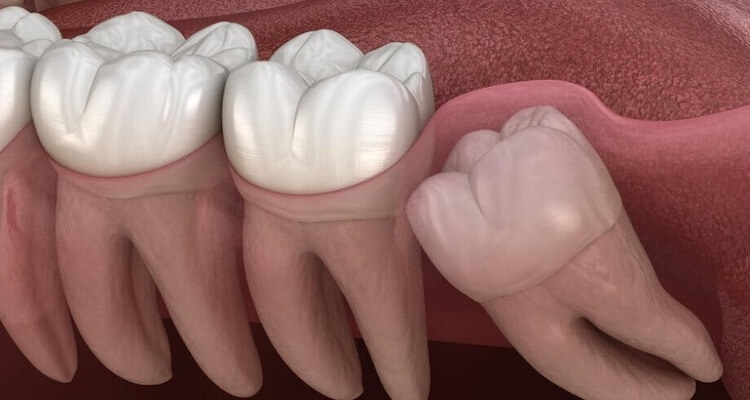
An impacted tooth is a tooth whose crown has not fully erupted through the gums. There are two types of impaction: complete impaction (the tooth is located in the alveolar bone) and partial impaction (the tooth is partially or completely covered by the mucosa).
This procedure belongs to the category of complex extractions and is usually planned. The patient undergoes oral hygiene treatment, the area around the tooth is numbed, the surgeon makes an incision in the mucosa, sections the tooth, loosens it, and removes it completely or in parts. After the procedure, the socket is sutured and the patient goes home for several days. It is necessary to return for follow-up visits on the third and seventh days: the first visit is for a routine checkup, and the second is for examination and removal of the surgical sutures.
When Wisdom Teeth May Not Need to Be Removed
“Wisdom teeth must always be removed, and the sooner the better” — this is an idea many of us have been taught since childhood, so at the first signs of wisdom teeth erupting we immediately turn to a specialist. But do all wisdom teeth really need to be removed? Dentist Maksym Makarenko explains.
Recommendations Before and After Tooth Extraction
We recommend taking your upcoming procedure seriously and preparing for it in advance. Although tooth extraction is a fairly simple operation, it is still a surgical procedure, and like any surgical procedure, it may have complications. Therefore, do not hide information about your health from your doctor, even if a certain detail may seem unimportant to you.
Ask about the restrictions that will apply after the procedure so that the recovery period goes as smoothly as possible. If you or your relatives have a history of allergic reactions, ask which anesthetic your doctor uses and have allergy testing done in a laboratory for that specific medication. Come to the procedure well fed and rested. Avoid alcohol and smoking on the day before surgery.
The main recommendation after tooth extraction is to follow your doctor’s instructions carefully. Be sure to take all medications prescribed to you, avoid sports and other physical activity, avoid overheating (bathhouse, sauna, tanning bed), and do not use warm compresses. Do not touch the socket with your tongue, eat soft, non-spicy food throughout the healing period, and avoid harmful habits. Prevent your tongue, food, and toothbrush from coming into contact with the socket. Rinsing the mouth is prohibited because it may dislodge the blood clot from the socket.
What Happens After Tooth Extraction?
If you are looking for answers to questions such as what to do after tooth extraction, complications after tooth extraction, rehabilitation after tooth extraction, how to avoid dry socket, jaw pain after tooth extraction, or why you should not spit after extraction, this video will give you clear and simple answers.
Possible Complications After Tooth Extraction

Pain
Pain after tooth extraction may accompany the patient for the first few (2-3) days. Pain is a common side effect after complex tooth extraction and is completely normal. It occurs due to trauma to the mucosa, gums, bone, and the formation of an internal hematoma. To reduce pain, take the painkillers and anti-inflammatory medications prescribed by your doctor.

Swelling
Swelling is completely normal after complex tooth extraction, but it may sometimes also occur after a simple extraction. The swelling gradually increases, peaks on the third day after the procedure, and then subsides. It should be localized to the extraction area. If the swelling extends far beyond the treatment area or appears on the opposite side, you should contact your doctor immediately.

Bleeding
Slight bleeding from the socket during the first two hours after the procedure is considered normal. If the bleeding is heavy, does not stop, or repeatedly starts and stops, this is already a pathological condition and you should contact your doctor. To avoid complications such as bleeding, avoid hot food, overheating, and excessive physical or emotional strain.

Numbness
Numbness or partial numbness of the tongue, lips, or cheek may be either a complication or a normal condition. Normally, the numbness goes away on its own within a month. If numbness in a certain area persists for months, it is highly likely that one of the nerves was affected during the anesthetic injection. In such a case, you will need qualified medical care.

Hematoma
Because of tissue trauma during the procedure, a hematoma may sometimes occur. That is why after complex, traumatic procedures, the doctor recommends applying cold to the outside of the face.

Pain When Swallowing
Because of a hematoma, some patients may experience pain when swallowing. This type of pain does not threaten the patient’s health and goes away naturally as the hematoma resolves.

Trismus
Trismus is difficulty opening the mouth when the patient cannot open the jaws normally. It occurs because of inflammation in the temporomandibular joint. That is why anti-inflammatory medications should be taken if prescribed by your doctor, even if nothing seems to bother you. Trismus is a normal condition after tooth extraction and usually resolves on its own within 2-4 weeks. If the symptoms do not disappear after 4 weeks, you should contact your doctor. The condition can be relieved with painkillers or muscle relaxants only as prescribed by a doctor, as well as with a slightly warm compress.

Inflammation
Inflammatory processes may be part of healing, a natural stage of recovery, or a pathology. Swelling is essentially an inflammatory process, and as mentioned above, such a condition can be normal. If you notice a taste of pus or an unpleasant odor from the mouth, you should contact your doctor immediately, as this is a significant postoperative complication. To avoid inflammatory processes, maintain good oral hygiene and carefully follow your surgeon’s instructions, taking all prescribed medications.
Our Doctors

Maksym Makarenko

Roman Mamonov

Yevhen Makarenko

Maryna Mamonova
Cost of Tooth Extraction
Tooth Extraction
from 2900 UAH
Included: sterile kit, injection anesthesia, surgeon’s work, 24/7 postoperative support, doctor’s recommendations.
Complex Tooth Extraction
from 6100 UAH
Included: sterile kit, injection anesthesia, surgeon’s work, socket suturing, 24/7 postoperative support, removal of surgical sutures, doctor’s recommendations.
Payment
We have no hidden charges. Payment is made according to the price list and the agreed treatment plan.
You can pay in cash or cashless (via bank terminal).
Treatment can also be provided through an insurance claim via an insurance company or under a contract with another organization.
Guarantees
We provide a guarantee for all types of dental treatment services, provided that the patient follows all of the doctor’s requirements and recommendations. More detailed information can be found in the “Guarantees” section.
Frequently Asked Questions About Tooth Extraction
Food Got Into the Socket — What Should I Do?
After tooth extraction, you should not rinse your mouth actively. If food gets into the socket, you can make “oral baths” with plain lukewarm water or with the medications prescribed by your doctor. How do you do that? Take water into your mouth and hold it in the area you want to clean. You may gently move the liquid from side to side 2-3 times to help remove food food particles.
Are Antibiotics Always Prescribed After Extraction?
No, not always. Antibiotics are prescribed to prevent inflammatory processes in the body after traumatic procedures (for example, complex extraction).
How Long Should I Keep the Gauze Pad After the Procedure?
The gauze pad used to stop bleeding should be removed 20-30 minutes after the procedure. Keeping it in your mouth throughout the day is not only unnecessary but also dangerous.
How Can I Tell Whether the Socket Is Healing?
If the socket is closing, healing is taking place. If there is constant oozing or you can taste blood all the time, you should contact your doctor. Epithelialization occurs during the first three weeks — this is the stage when the gums are covered with soft tissue (epithelium). After that, healing continues inside and the resulting space gradually fills in. Full recovery usually takes place within 6-8 weeks.
Can Pregnant Women Have Teeth Removed?
Tooth extraction is generally not recommended for pregnant women. However, if it is truly necessary, the procedure may be performed only with prior approval from the doctor who is supervising the pregnancy and only in the third trimester.
When Is the Best Time to Remove Wisdom Teeth?
Wisdom teeth are removed only when there are specific indications. For example, if the “eights” begin shifting the dental arch, orthodontic treatment is planned, a mispositioned tooth is erupting painfully, or the person’s jaw has fully formed and imaging shows that the teeth are positioned incorrectly.