
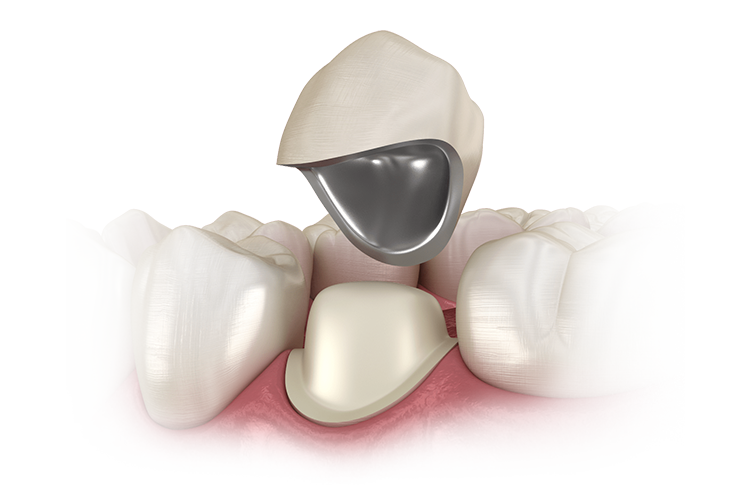
What are metal-ceramic crowns?
When to choose metal-ceramic crowns?

When the budget does not allow for ceramic crowns

When the patient needs prosthetic restoration of posterior teeth

When there are contraindications to other prosthetic methods

When more than 50% of a tooth's crown is destroyed

When other prosthetic restorations are already present in the mouth
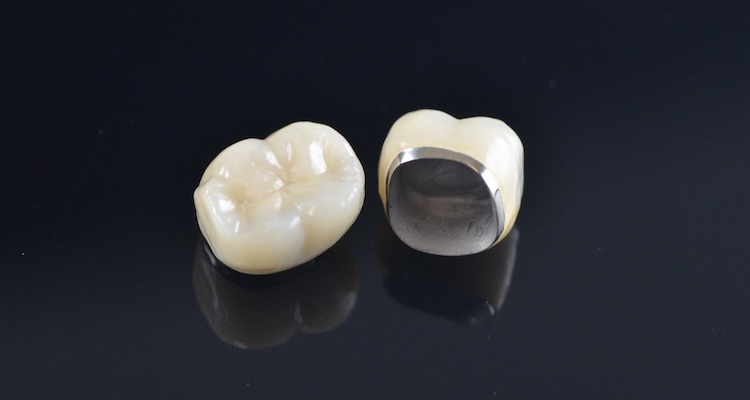
Types of metal-ceramic crowns
Traditional crowns
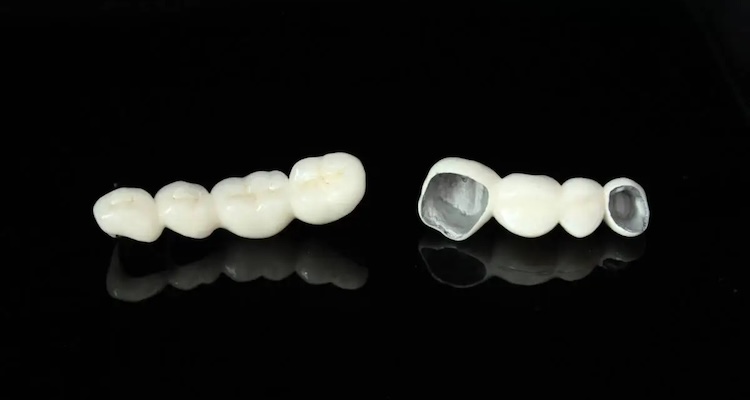
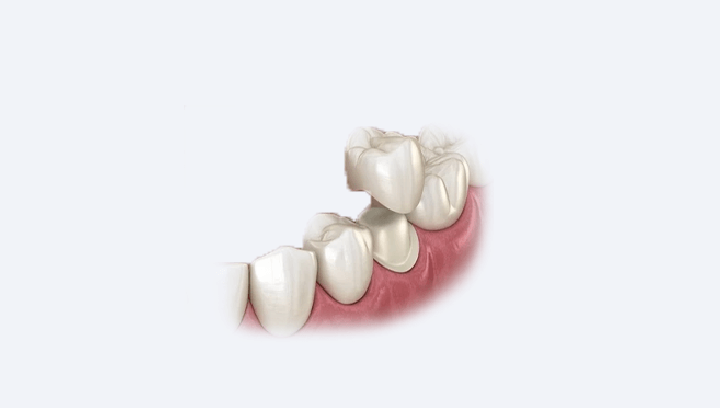
The crown consists of a metal framework made from a cobalt-chromium alloy, with a ceramic coating covering the entire surface except for the cervical area (the part of the crown that will be hidden under the gum). These crowns are rarely used today, since the exposed metal often causes darkening of the gum in that area, provokes gum recession and can trigger allergic reactions to the metal alloy.
Adapted crowns
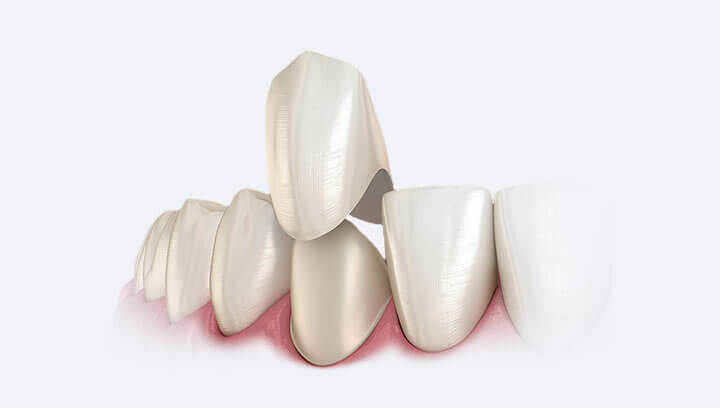
These are the same classic metal-ceramic crowns, but here the ceramic coating covers the metal framework completely, including the cervical area. Because the metal base no longer contacts the gum, this delivers a noticeably better aesthetic result (the gum does not darken) and prevents gum recession. In other words, this is an improved version of the dental crown.
Gold-alloy crowns
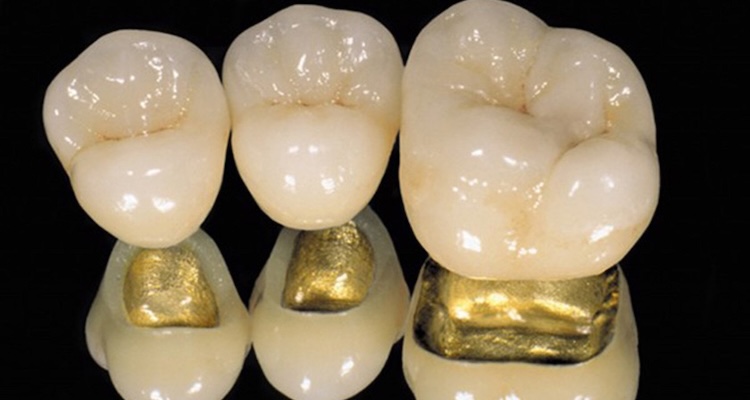
These are crowns whose framework is made from gold, and more rarely from platinum. Such crowns were in demand for a time because they were considered fully biocompatible, unlike cobalt-chromium, nickel-chromium or palladium-based alloys. However, cases of allergic reactions to gold are now encountered more and more often. A crown with a gold framework yellows over time, and its price is close to that of an all-ceramic crown, so today these crowns are no longer in demand.
SLS or CAD/CAM crowns
Stages of making an SLS crown
Jaw scanning
Modeling
Contour forming
Framework building
Ceramic layering
Fixation
Cost of metal-ceramic crowns
Temporary dental crown
3,000 UAH
Digital metal-ceramic crown
12,500 UAH
A fully anatomical metal-ceramic crown with maximum likeness to a natural tooth.
Payment
We have no hidden fees. Payment is made according to our price list and the agreed treatment plan.
You can pay in cash or by card (via a bank terminal).
We also accept treatment covered by insurance companies and under corporate agreements with other organizations.
Warranty
We provide a 1-year warranty on the metal-ceramic dental crowns we make, provided that the usage guidelines and the dentist's recommendations are followed. You can review the warranty terms in the "Warranty" section.
Our team
Maksym Makarenko
Roman Mamonov
Yevhen Makarenko
Maryna Mamonova
Lydia Bulygina
Alternatives to metal-ceramic crowns
When a tooth needs prosthetic restoration, the only alternative treatment methods are other types of prosthetics:
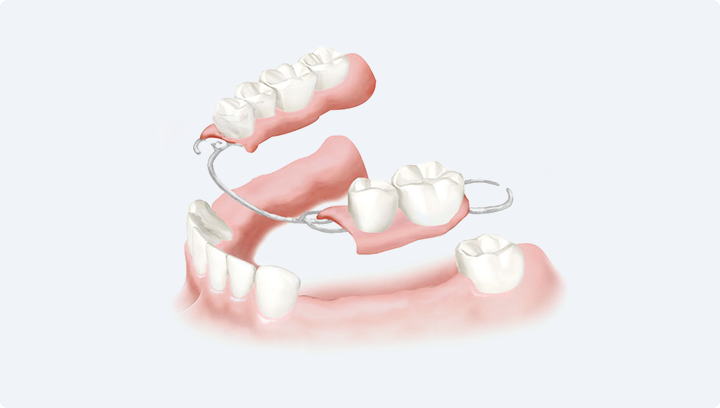
Removable and partial removable dentures. Suitable for cases where more than one tooth in a row has been lost completely. The service life of such dentures is shorter, and their aesthetics and comfort in use are lower.
All-ceramic dental crowns. They offer higher aesthetics and a longer service life (10–15 years) than metal-ceramic restorations. Fully biocompatible. Their cost is 1.5–2 times higher.
e.max glass-ceramic. Lithium disilicate (glass-ceramic) is a very strong material whose properties are close to those of natural tooth enamel. Crowns made from this material are typically used to restore anterior teeth. Their cost is roughly twice that of a metal-ceramic crown, and their service life is also about twice as long, since this material protects the opposing tooth from natural wear.
Zirconia crowns. Crowns made from multilayer zirconium dioxide are the most versatile option, leading the way in strength, durability and aesthetics. With proper care, zirconia crowns and dental bridges serve for around 15 years or more, represent the strongest available material, and look very similar to natural teeth. Their cost is 2–3 times higher than that of a metal-ceramic crown.
Book a consultation or treatment
Please fill out the form, and we will call you to arrange a convenient time for your visit