

Why are dental bridges needed?
A dental bridge is a fixed prosthetic one-piece structure made of two or more crowns that replaces one or more missing teeth in a row and is supported by adjacent teeth.
Bridge restorations can be fixed both on implants and on natural teeth. Bridge prostheses are made from the same materials as dental crowns. Let’s look at the differences, advantages, and disadvantages of each type.

Types of bridge restorations
The main difference between bridge prostheses for the patient lies in the material and the method of fabrication. We would like to emphasize that highly aesthetic materials are preferable for prosthetic restoration of front teeth, while the strongest structures should be preferred for chewing teeth.
All modern ceramic materials used to make dental bridges have approximately the same service life, and each has its own advantages and disadvantages. Listen to your doctor’s recommendations for your specific case; whenever possible, he or she will also take the patient’s wishes into account.
Next, we will look at the methods of fabricating bridges:
One-piece cast. The most common, classic fabrication method. The entire structure is one solid piece, without soldering, attachments, or transitions. Such structures are placed both on implants and on natural teeth.
Stamped. This method is not used in modern practice. It was used for metal structures based on a standard, universal blank. In other words, this technique does not take anatomy into account, which can cause significant harm to health. Such structures were additionally covered with a layer of bulat steel.
Adhesive. This is a structure consisting of one tooth and two lateral attachments fixed to the supporting teeth from the inner side. Such bridges are usually used as a temporary solution for restoring a tooth during dental implant treatment. The service life of an adhesive “bridge” is 3–5 years. Its advantage is a conservative approach, as there is no need to prepare the supporting teeth.
Splinted. The bridge structure consists of two parts connected to each other with a special lock. This method is used when the supporting teeth are positioned abnormally.
Types of bridge restorations by fabrication material
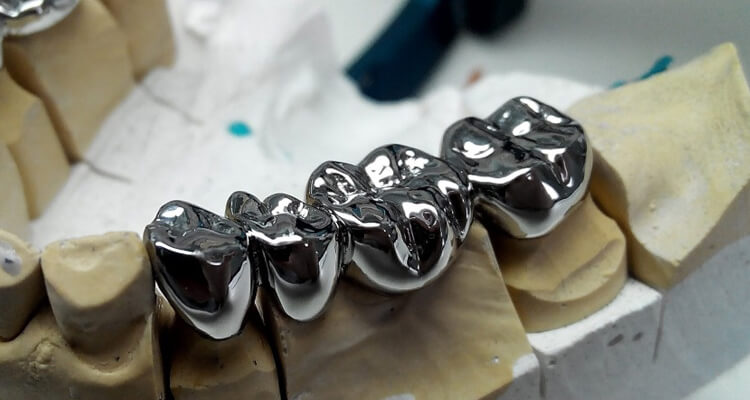
Metal
Metal prostheses are hardly used in modern dentistry. These are rather bulky, low-aesthetic structures that, although strong, can create even more health problems, such as gastrointestinal disorders, damage to healthy antagonist teeth, and so on. Metal-ceramic restorations are an excellent alternative to metal structures: they are not much more expensive, but they are more aesthetic.
Advantages:
- Strength
- Affordable cost
Disadvantages:
- May cause an allergy to the metal in the alloy
- Damage to supporting and antagonist teeth
- No aesthetic value
- Load on soft tissues
- Cause bone tissue atrophy
Service life: 5 years
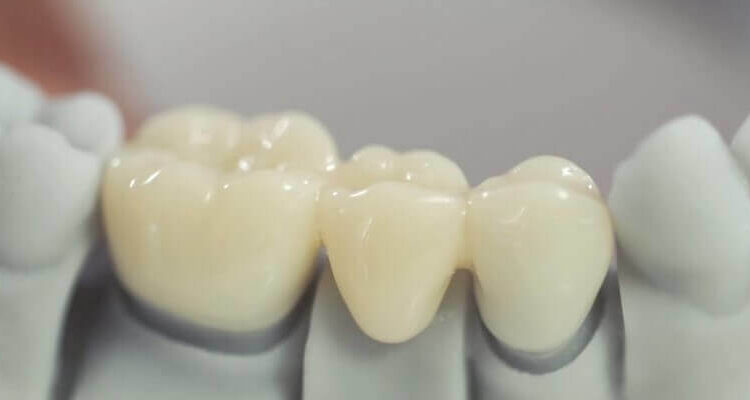
Metal-ceramic
The base or framework of these structures is a metal alloy onto which a layer of ceramic coating is applied. This type of prosthetic restoration will soon be considered outdated, but it is still in demand today. In terms of price and quality, these structures perform well and meet the minimum patient request: aesthetic and long-lasting restoration of tooth function.
Advantages
- Relatively affordable cost
- Reproduces tooth anatomy
Disadvantages
- May cause an allergy (due to the presence of metal)
- Relatively low aesthetic result when fixed on an implant
- Short service life
- Cause bone tissue atrophy
- Long fabrication time
Service life: 5–7 years

All-ceramic
Aesthetic, strong, and hypoallergenic. These structures are made by a technician in a laboratory or using a CAD/CAM system in one day (provided that the restoration includes no more than four teeth). All-ceramic structures, unlike metal-ceramic ones, look excellent. This is true even when they are fixed on an implant, because there is no metal framework showing through in the gum “neck” area. As a rule, ceramic bridge restorations are used for prosthetic restoration of front teeth.
Advantages:
- Reproduces tooth anatomy
- Highly aesthetic
- Good biocompatibility
- Strength
- Preserves aesthetics with all types of fixation
Disadvantages:
- Long fabrication time for large restorations
- Cause bone tissue atrophy
Service life: 10–15 years
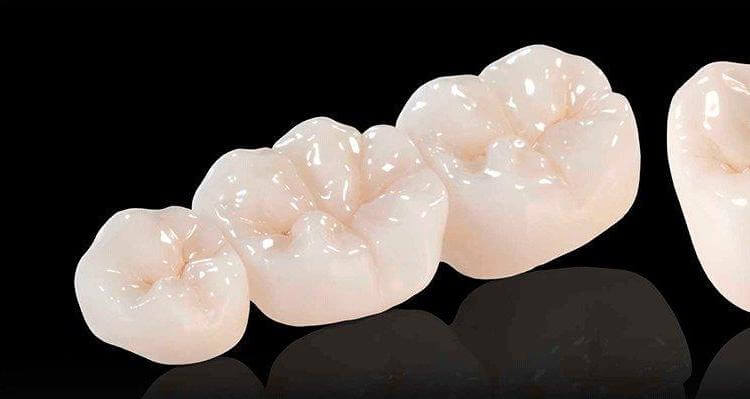
Zirconium dioxide
Highly aesthetic, with a high light-transmission value (which makes the tooth look as natural as possible). Zirconium dioxide bridge restorations are milled using CAD/CAM technology, then sintered in a furnace and manually coated with glaze. This technology makes it possible to fabricate an anatomically precise dental prosthesis and avoid complications that may result from human error.
Advantages
- High strength
- Highly aesthetic
- Good biocompatibility
- Preserves aesthetics with all types of fixation
- Fast fabrication
Disadvantages
- Relatively high cost
- Cause bone tissue atrophy
Service life: 10–15 years
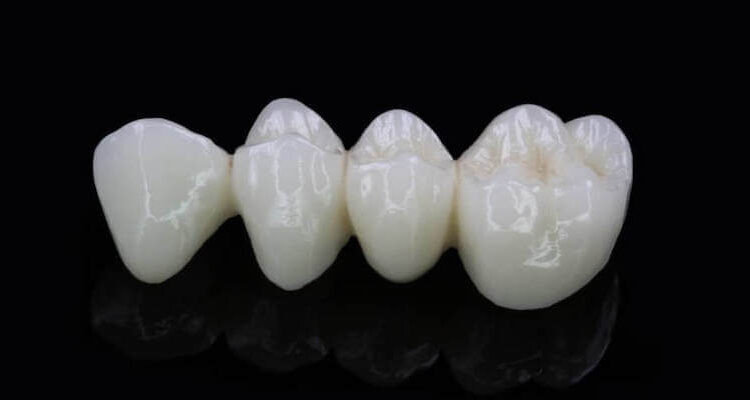
Combined ceramic
This type of bridge prosthesis combines an anatomical zirconium dioxide framework with a top layer covered with ceramic to reproduce the natural appearance of teeth and their natural imperfections. The framework is made using CAD/CAM technology, and the ceramic coating is applied manually by a technician. Such a prosthesis will look very natural, even if the patient’s own teeth have certain color defects. The disadvantage of these structures is the risk of chipping of the ceramic layer. In that case, the entire structure will have to be replaced. Such prostheses are recommended for placement in the front tooth area.
Advantages:
- Strength
- Reproduces tooth anatomy
- Highly aesthetic
- Biocompatibility
- Preserves aesthetics with all types of fixation
- Fast fabrication
Disadvantages:
- Relatively high cost
- Fragility of the final layer
- Cause bone tissue atrophy
Service life: 10–15 years
PMMA
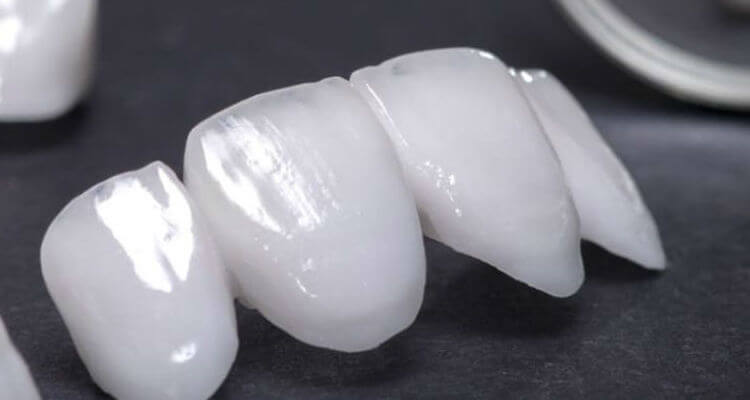
The material used for fabrication is synthetic polymethyl methacrylate (PMMA, plastic), and it is used for temporary prosthetic restoration of teeth. The material has a fairly natural appearance and performs its role well in improving the patient’s quality of life. It is used in cases where immediate loading of the tooth is not possible (usually after dental implantation). Of all the materials listed above, PMMA has the lowest cost, but also a short service life. Bridge prostheses made from this material cannot be worn permanently. Fabrication is performed on a milling machine and takes approximately 7 minutes per unit.
Advantages
- Affordable cost
- Reproduces tooth anatomy
- Aesthetic
- Biocompatibility
- Preserves aesthetics with all types of fixation
- Fast fabrication
Disadvantages
- Short service life
- Unreliable fixation
Service life: up to 12 months
Patient reviews
In this video, our patient from Spain and dental surgeon-implantologist Maksym Makarenko talk about all the stages and details of placing bridge prostheses and ceramic crowns.

The process of placing “bridges”
Consultation and diagnosis
Hygiene. Oral sanitation
Preparation and depulpation
Scanning
Modeling the bridge structure
Milling the structure
Sintering and coating the structure
Fixation of the bridge structure
Possible complications after placement of bridge prostheses
- Sensitivity of the supporting teeth (up to 14 days)
- A feeling of pressure on the supporting teeth (up to 5 days)
- Pain caused by excessive preparation of tooth enamel
- Decementation of the prosthesis
- Chipping/fracture of the structure due to improper use or an incorrectly planned design
Care for bridge restorations
Although dental bridges are not affected by caries, proper care is necessary to extend their service life. A few recommendations from our prosthodontists:
- Brush your teeth twice a day. This helps remove soft plaque and reduce inflammation in the soft tissues of the oral cavity.
- Use an oral irrigator. Using an irrigator twice a week can easily remove food debris and accumulated plaque from hard-to-reach areas, including under the gumline.
- Use interdental brushes and floss. For daily use. These tools remove food debris from contact areas and interdental spaces.
- Use low-abrasive toothpastes. To preserve the color and smooth surface of bridge prostheses, it is recommended to avoid highly abrasive toothpastes and replace them with low-abrasive ones.
- Professional hygiene twice a year. It is impossible to remove absolutely all hard and soft dental deposits at home, so we recommend visiting a hygienist every six months. In addition, this allows the doctor to monitor the overall condition of the oral cavity and detect diseases in time, if any are present.
- Avoid hard foods. Bridge restorations are strong enough, but it is not recommended to overload them with very hard foods, such as nuts.
Alternative to dental “bridges”
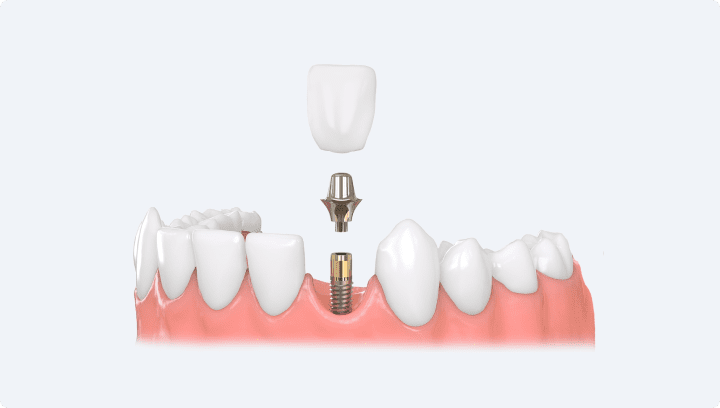
Dental crown on an implant
This method of restoring tooth function is more durable, stops the progression of atrophy, and provides a more natural result. The disadvantages of implantation include the higher cost of the procedure and its invasiveness. The tooth restoration period is also longer. Even when a crown is placed on the day of implantation, it is necessary to wait for complete osseointegration of the implant (from 1.5 to 6 months) before the prosthetic stage.

Removable/conditionally removable dentures
This type of prosthetic restoration has certain indications, one of which is multiple or complete edentulism. In other words, this method is not suitable when only several teeth or one tooth are missing. Removable dentures have a relatively affordable cost, but their service life is shorter (3–5 years). Fabrication of such dentures takes 10–14 days, and comfort during use is lower compared with bridge prostheses.
Advantages of dental prosthetics in our clinic

In-house laboratory
An in-house digital dental CAD/CAM Cerec laboratory for the fabrication of dental crowns, inlays/onlays, veneers and bridge prostheses. We work without intermediaries, which significantly reduces the cost and the time required for prosthetic treatment.
Own CT scanner
Our clinic is equipped with a modern dental CT scanner, Dentsply Sirona Orthophos, which enables us to perform precise X-ray diagnostics and detailed treatment planning before prosthetic restoration.
Dental microscope
In many cases, root canal treatment is required before prosthetic restoration. Working on the root canals under a dental microscope is not only convenient for the dentist, but also guarantees a high-quality result for the patient.
Dental milling unit
A single prosthetic restoration is fabricated in 7 to 30 minutes with high anatomical accuracy. Because the dentist sees the patient in person, they can design a restoration that is as close as possible to the natural teeth in colour and shape.Cost of dental “bridges”
Digital tooth impression
800 UAH
Creating a digital tooth impression. Price per projection.
Metal-ceramic bridge prosthesis
from 25,000 UAH
Fabrication of a metal-ceramic dental bridge with maximum similarity to natural teeth. Bridge fabrication takes 5–7 days.
Ceramic bridge prosthesis
from 53,000 UAH
Fabrication of a dental bridge with maximum similarity to a natural tooth. Made from zirconium dioxide on automated Sirona milling equipment.
Payment
We have no hidden fees. Payment is made according to the price list and the agreed treatment plan.
You can pay in cash or by cashless payment (through a bank terminal).
You can receive treatment under an insurance case through an insurance company or under an agreement with another organization.
Guarantees
All dental bridges we fabricate come with a 1-year guarantee, provided that the rules of use and the doctor’s recommendations are followed. You can read the guarantee terms in the “Guarantees” section.

Oral surgeon Maksym Makarenko
Honored Doctor of Ukraine. Doctor of Sciences. 25 years of clinical practice.
- Member of the Ukrainian Association of Digital Dental Technologies
- Member of the Association of Implantologists of Ukraine
- Member of the Association of Periodontists of Ukraine
- Member of the International Team for Implantology (ITI)
Regularly takes advanced training courses in oral surgery, implantology, prosthodontics and periodontology.
Patient reviews


Our doctors’ work

Dental arch restoration: ceramic restorations and smile midline correction
A patient came to us for professional hygiene and complained of mild pain in the lower right jaw area. During...
Full-mouth rehabilitation on Straumann BLX implants: All-on-6 and bridges
A patient came to us complaining of mobile bridges on the upper and lower jaws, an inability to chew properly,...

Chewing teeth restoration: Alpha Dent implants, veneers and crowns
A 62-year-old patient came to us. He was bothered by a broken bridge on the right side that made chewing...
Frequently asked questions about bridge restorations
Can a “bridge” be made in 1 day?
If the other and/or supporting teeth do not require additional treatment, our clinic can scan the jaws, fabricate, and place a ceramic bridge prosthesis on the same day or the next day.
What should I do if a “bridge” has come off?
Decementation of a dental bridge is possible, and it is not critical. If this happens to you, contact your doctor for refixation. It is important to keep the structure intact and not delay, in order to prevent destruction of the supporting teeth.
Can healthy teeth be left unprepared when placing a “bridge”?
Preparation can be avoided, or kept minimal, only when adhesive bridges are placed. Such structures have a number of indications, for example, the absence of only one tooth. In other cases, tooth preparation will be necessary.
How long does it take to get used to a dental bridge?
The adaptation period lasts up to two weeks. During this time, sensitivity decreases and the patient becomes accustomed to the prosthesis.
What should I do if there is a gap between the “bridge” and the gums?
If the structure was placed recently, it needs to be replaced because it was fabricated with an anatomical error. If this problem appears after many years of use, it is necessary to identify the cause, perform diagnostics, and decide on further steps with your doctor: implantation with bone grafting or replacement of the bridge prosthesis.