Dental prosthetics with dental zirconia bridges

Maksym Makarenko

Максим Макаренко Specializes in: surgery, dental implantology, periodontology, and prosthetics

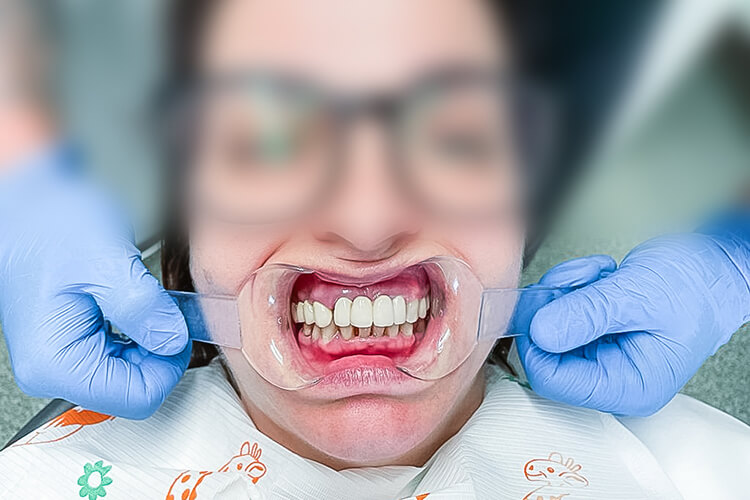
The patient came to us with a complaint about an aesthetic defect, namely missing teeth on the right side of the upper and lower jaws due to the loss of a dental bridge. As a result, the patient could not chew food properly. There was also mobility of the anterior dental bridge due to its partial decementation and overload of the anterior area as a whole.

We offered two treatment options:

  1. Placement of dental implants to replace the missing teeth and prosthetic restoration with ceramic bridges and crowns
  2. Since the abutment teeth were in satisfactory condition — rational prosthetic restoration with zirconium dioxide structures.

The patient chose the second treatment option because it was both more cost-effective and faster.

STEP 1

Doctor’s examination, CT diagnostics

An examination was performed, CT diagnostics were carried out, and two treatment plans were prepared. The treatment strategy was determined.
STEP 2

Treatment of abutment teeth

Retreatment of the root canals of the abutment teeth was performed using a dental microscope. Endodontic treatment was carried out over three visits so that the patient would not feel overtired or exhausted.
STEP 3

Scanning and modeling

Digital scanning of the jaws was performed to obtain dental models. The teeth were modeled using computer technology, and a mock-up model was fabricated.
STEP 4

Mock-up try-in. Bite adjustment

The model of the future teeth was transferred into the oral cavity. The shape and color of the teeth were approved. The bite was adjusted, and we made sure that everything was correct not only from a medical point of view but also comfortable for the patient.
STEP 5

Temporary prosthetics

Temporary PMMA bridge prostheses were fabricated and fixed. The patient will wear these restorations for several days to monitor her own comfort and convenience.
STEP 6

Fabrication and fixation of bridges

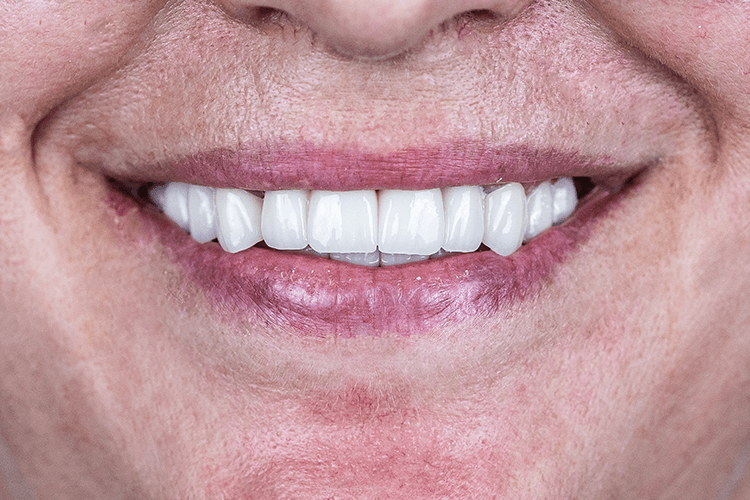
Permanent bridge structures made of zirconium dioxide were fabricated on a Sirona InLab MC X5 digital milling machine. The structures made from ‘raw’ zirconium dioxide were sintered in a special furnace at high temperatures, then covered with glaze and sintered again. The dental bridges were transferred and fixed with permanent dental cement.

Summary

After the patient accepted the work, recommendations were provided on caring for the prostheses and oral cavity. A photo protocol was completed. The entire treatment took 2 weeks and consisted of 6 visits.

Schedule a consultation with a dentist