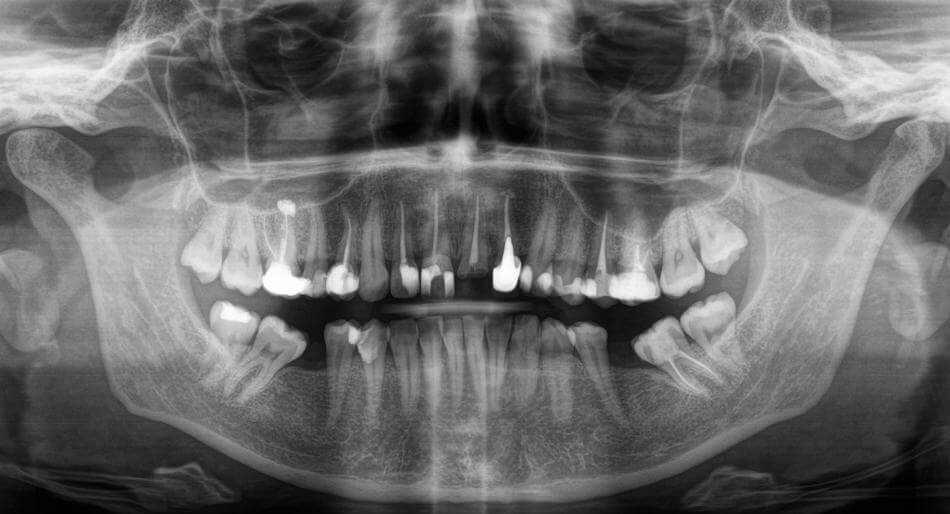
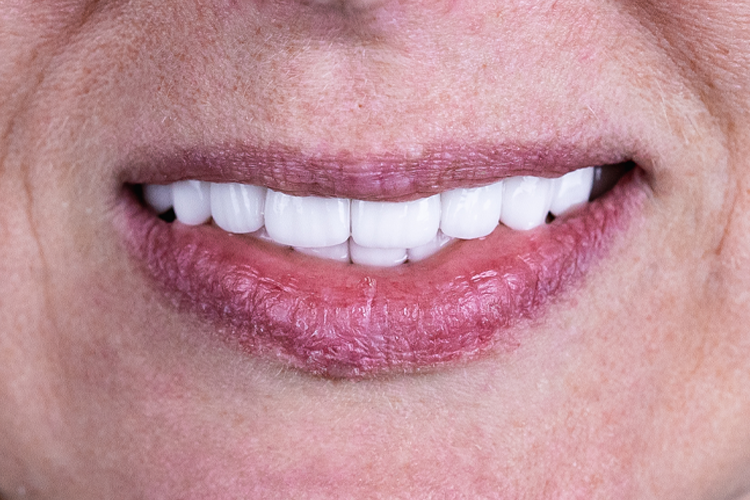
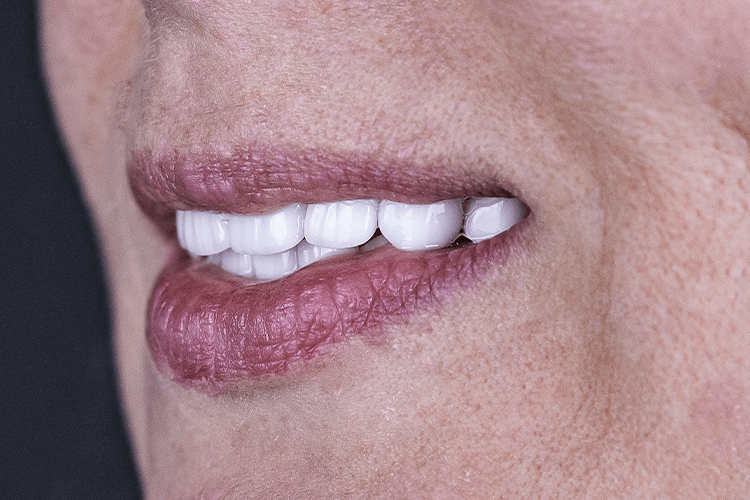
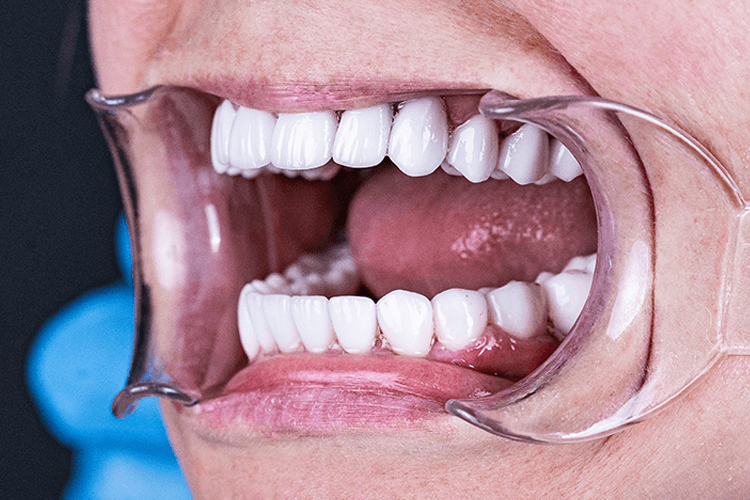
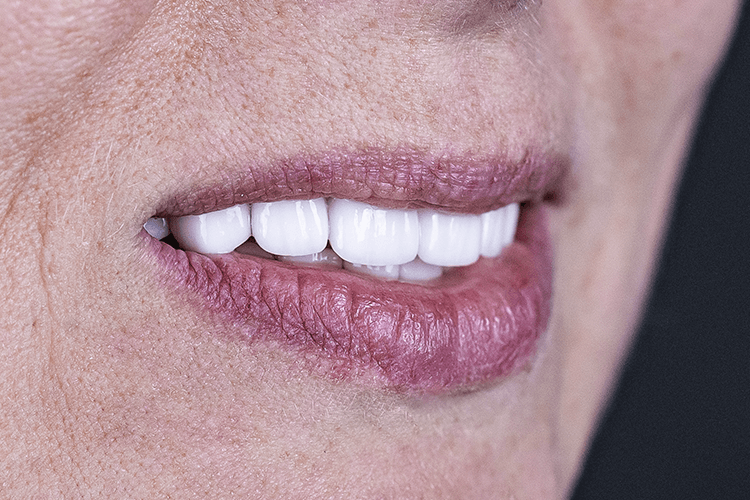
The story of this patient began 2 years ago. At that time, she came to us requesting a ceramic crown on an upper front tooth. The problem arose at the stage of shade selection, because all the front teeth had different shades: there were ceramic crowns, metal-ceramic crowns, restorations, and natural teeth in shades A4 and A3.5. At that time, an intermediate shade option was chosen, and we suggested fully restoring the smile zone in the future, when the patient was ready.
Recently, this patient visited the clinic with a request for a complete replacement of the teeth in the upper jaw. The doctor performed an examination and diagnostics. The root canals were normal and did not require treatment. Tooth wear was detected, and to visually lengthen the teeth, laser correction of the gumline was recommended.
The sixth teeth were missing in the lower jaw and needed to be replaced with implants. Since implant-supported crowns were planned for the lower jaw, they would allow us to raise the bite and prevent further tooth wear in the future.
The shade selected for the future dental restorations was bleach white, a bright white shade. Please note that the natural tooth shade differs from bleach white by 3-4 shades, and if the upper jaw is restored in this shade, there will be a strong contrast with the lower jaw.
Taking all of the above into account, our doctor proposed the following treatment plan: complete replacement of the upper-jaw restorations from the fifth tooth on one side to the fifth tooth on the other with crowns and bridges made of lithium disilicate (E-max) through a mock-up, placement of implants in the sixth-tooth areas on both sides of the lower jaw, covering the implants with crowns, and veneers in the front area of the lower jaw to achieve a bright white smile and correct the bite through prosthetic treatment. The patient agreed.
During treatment, our specialist suggested making adjustments, because during modeling, after the initial jaw scans were obtained, it was found that the lower seventh teeth had shifted toward the missing sixth teeth. The defect caused by the missing teeth could be closed with dental crowns without implant placement, which would significantly reduce the treatment time and cost. The patient agreed to these changes in the plan, and we continued the path toward a bright white smile, but without implant placement.
The entire treatment took 4 visits to the clinic over 10 days and consisted of the following stages: