Dental prosthetics with crowns and veneers

Maksym Makarenko

Максим Макаренко Specializes in: surgery, implantology, and prosthetic dentistry

A patient from abroad came to our clinic with a request for a complete smile restoration. She had previously consulted doctors in Europe where she lives, but no solution to her problem had been found. Her medical history revealed pathological tooth wear and secondary edentulism (missing some teeth). Our task was to create a beautiful smile within a short timeframe while ensuring that the new teeth would serve her for many years.

Our doctors offered two treatment options:

  1. to restore the bite height using ceramic dental crowns and bridge-like prostheses to prevent further tooth wear, and to restore the smile zone with composite restorations.
  2. to restore the bite height with ceramic crowns and prostheses, stop tooth wear, and cover the smile zone with ceramic veneers.

The patient chose the second treatment option. This plan is more expensive, but also more durable.

STAGE 1

Examination and diagnostics

We performed an examination and assessed the overall condition of the patient’s dental health using CT diagnostics. We listened to all her wishes and, once we had all the necessary data, prepared several treatment plans. We explained the advantages and disadvantages of each approach and decided on the further treatment strategy.
STAGE 2

Scanning and modeling

We performed professional oral hygiene and took digital impressions of the jaws using an intraoral scanner to create a mock-up model. In specialized software, we recreated the shape and color of the future teeth. The approved version was sent to the laboratory for mock-up printing.
STAGE 3

Model try-in

The tooth model was printed on a dental printer. The patient was able to evaluate the shape and color of the future teeth while looking at herself in the mirror, assess the level of comfort, and request adjustments.
STAGE 4

Removal of old dental prostheses

The patient had a bridge-like prosthesis that needed to be replaced to restore the bite height. The old prosthetic structure was removed to proceed with prosthetic treatment.
STAGE 5

Scanning and modeling

We scanned the jaws again, this time without the prosthetic structures. These completed scans would be used to fabricate two types of prostheses: permanent and temporary. The future restorations were modeled with the previous adjustments and wishes taken into account.
STAGE 6

Fabrication of temporary prostheses

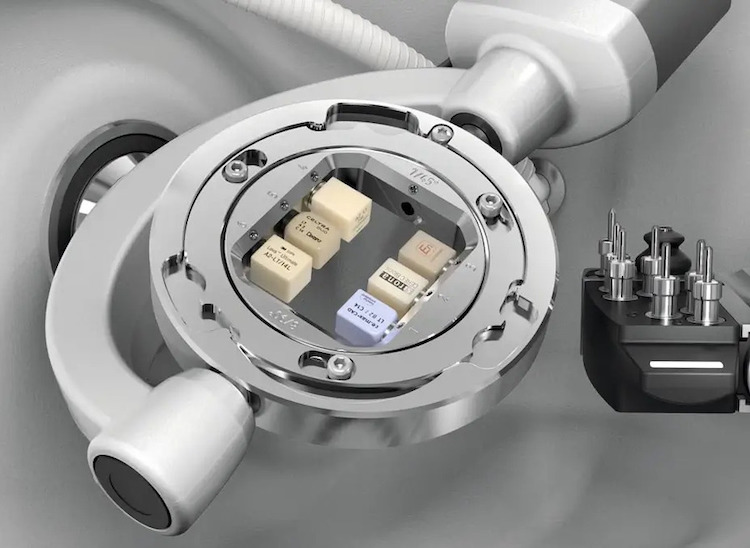
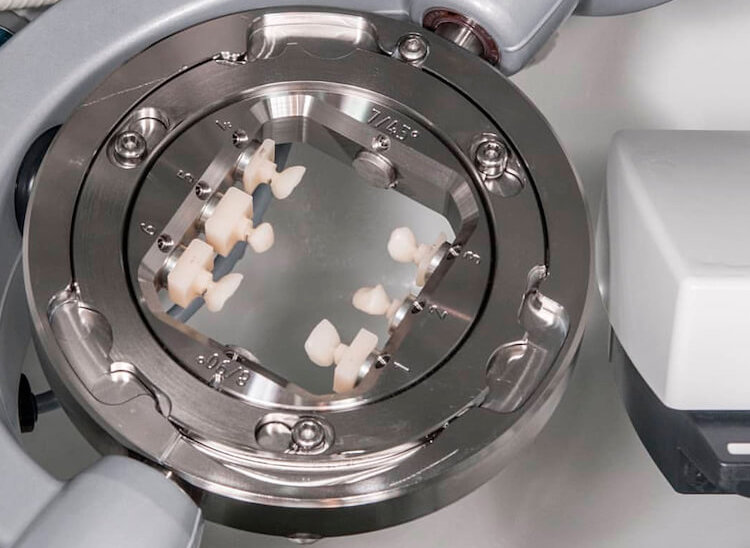
Bridge-like prostheses, crowns, and veneers made of PMMA material (polymethyl methacrylate) were fabricated on a milling machine in 1 visit. Thanks to the PMMA structures, the patient would not have to go without bridgework, and she could also make a final decision about whether the new teeth felt comfortable and whether she was satisfied with her choice.
STAGE 7

Fabrication and fixation of crowns and veneers

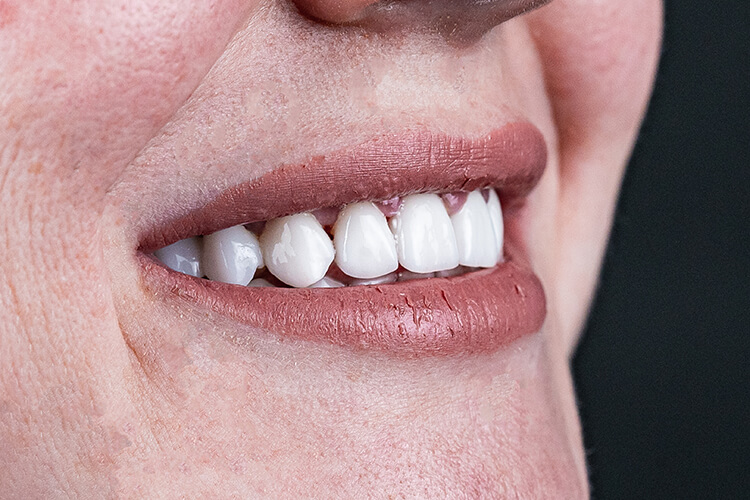
High-strength, natural-looking all-ceramic restorations were fabricated in the digital laboratory. The temporary prostheses were removed, and the ceramic restorations were immediately fixed, this time using permanent cement. The result was documented in the photo protocol. The patient received recommendations and care instructions for the veneers and crowns to help extend their service life.
SUMMARY

It would also have been appropriate to offer another treatment option involving the placement of dental implants in the areas of the missing teeth. However, the CT scan revealed a bone tissue deficit caused by the long-term absence of the natural tooth. We also had a limited treatment timeframe, which did not allow for bone augmentation, implant placement, and prosthetic restoration. This treatment was completed in 3 clinic visits by the patient over 7 days.

Book a consultation with a dentist