
All-inclusive dental implant treatment

Dental implant treatment is a step-by-step process that includes diagnostics, surgical implant placement, gum contouring, and fabrication of a permanent crown with bite adjustment. The all-inclusive format means that all stages — from the initial examination to crown fixation and follow-up checkups — are carried out within one treatment plan. Without splitting the process into “separate services” and without unexpected extra charges along the way.

The cost of all-inclusive dental implant treatment in Kyiv starts from UAH 38,900. The final amount depends on the clinical situation and the selected type of implant and crown.

What is included in all-inclusive implant treatment

Implant placement

Імплантація "під ключ"
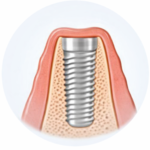
The implant is placed under local anesthesia in accordance with the surgical protocol.

Gum contouring

Імплантація "під ключ"
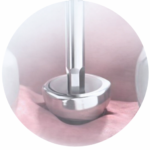
Depending on the selected protocol, the healing abutment is placed immediately or after the implant has integrated.

Abutment placement

Імплантація "під ключ"
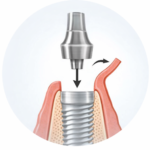
The abutment is fixed — the connecting element between the implant and the future crown.

Crown fixation

Імплантація "під ключ"
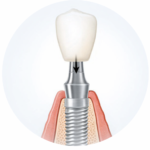
A custom crown is fabricated and fixed using either a screw-retained or cement-retained method.
Smart choice: reliable quality without overpaying
Country of manufacture South Korea
Implant warranty lifetime
Osseointegration success rate up to 98%
All-inclusive price
With a porcelain-fused-to-metal crown UAH 38,900
With a ceramic crown UAH 52,900
The price includes the full treatment cycle: diagnostics, implant placement under anesthesia, gum contouring, abutment, digital impressions, permanent crown, and follow-up checkups.

Neodent — a predictable result in most clinical cases
Country of manufacture Brazil
Implant warranty lifetime
Osseointegration success rate 95–98%
All-inclusive price
With a zirconia crown UAH 61,100
With a ceramic crown UAH 61,100
The price includes the full treatment cycle: diagnostics, implant placement under anesthesia, gum contouring, abutment, digital impressions, permanent crown, and follow-up checkups.

Straumann — the benchmark for reliability in implant dentistry
Country of manufacture Switzerland
Implant warranty lifetime
Osseointegration success rate up to 99%
All-inclusive price
With a zirconia crown UAH 70,600
With a ceramic crown UAH 70,600
The price includes the full treatment cycle: diagnostics, implant placement under anesthesia, gum contouring, abutment, digital impressions, permanent crown, and follow-up checkups.
What can affect the final cost of implant treatment

All-inclusive dental implant treatment has a base price. However, some clinical situations may require an additional treatment stage. Certain conditions are needed for implant placement: no active tooth decay, gum inflammation, purulent processes, uncontrolled periodontitis, diabetes mellitus, or other conditions that may interfere with healing. If there are problems in the oral cavity, they are treated first.

Insufficient bone volume

If there is not enough bone tissue for stable implant placement, bone grafting or a sinus lift may be required. This is a separate stage planned after CT imaging.

Need for tooth extraction

If the tooth is still present, extraction, socket cleaning, or restoration of the bone wall may be required. In some cases, implant placement is not performed immediately, but after healing.

Bite features

With excessive chewing load, bite correction or fabrication of a protective mouthguard may be required.

Active gum inflammation

Periodontitis or purulent processes must be stabilized before implant placement. Otherwise, the risk of complications increases severalfold.

Professional hygiene

Professional teeth cleaning is performed before the surgical stage to reduce the bacterial load in the oral cavity. This creates better conditions for healing of the tissues around the implant.

Complexity of prosthetic treatment

The cost depends not only on the implant itself, but also on the number of units and the type of orthopedic restoration (single crown, bridge, full reconstruction). The treatment plan is created individually.

Ask a Question!
We will provide expert advice and help you decide

Stages of all-inclusive implant treatment

Dental implant treatment is not a single procedure and not simply “screwing in a screw”. It is a sequential process in which surgery, biology, and prosthetics work together. We do not simply place an implant — we create the conditions for it to become part of the bone and withstand load for years. Below is how this happens in practice and what it means for the patient.

Діагностика та планування імплантації

Stage 1. Diagnostics and planning

Everything starts with a CT scan of the jaws. On the scan, we assess the volume and density of the bone, its width, and its proximity to the nerve or maxillary sinus. We assess how the bite works, whether there is overload, and whether there is active gum inflammation.

At this stage, we determine whether there is enough bone for implant placement, whether grafting is needed, and which protocol will be safe — one-stage or two-stage.

For the patient, this stage looks like a consultation and discussion of the plan. In reality, this is where the prognosis is established. The implant size, its position, and the loading protocol are selected.

Імплантація під ключ

Stage 2. Surgical stage

The implant is placed under local anesthesia, although general anesthesia is also possible on request. Most patients describe the procedure as less unpleasant than they expected. Pressure is felt, but not sharp pain.

After placement, the implant is either covered (two-stage protocol) or immediately brought through the gum with a healing abutment (one-stage option — when indicated).

The procedure itself usually takes up to 30 minutes for one implant. After surgery, moderate swelling or discomfort in the first few days is possible — this is a normal tissue response.

Імплантація "під ключ"

Stage 3. Healing period

After placement, the implant does not “hold on by itself”. It must integrate with the bone — this process is called osseointegration. Duration:

lower jaw — approximately 2–3 months

upper jaw — 3–6 months

During this period, the patient usually does not feel pain. It is important to follow the recommendations and avoid overloading the implant. Excessive micromovement can disrupt integration, so sometimes it is better to wait a little than to rush with the crown.

Імплантація "під ключ"

Stage 4. Gum contouring

After integration, a healing abutment is placed (if it was not placed immediately). Its task is to create the correct contour of the soft tissues around the future crown. This is important not only for aesthetics. A proper gum profile makes hygiene easier, reduces the risk of inflammation, and ensures a close fit of the crown.

For the patient, this stage is calm and without significant discomfort. But from the standpoint of long-term stability, it is very important.

After this, the abutment is placed — the transition part between the implant and the crown.

Імплантація "під ключ"

Stage 5. Prosthetic restoration

The crown must look natural and transfer chewing load correctly. If the load is distributed incorrectly or the shape makes hygiene difficult, problems may appear years later. Therefore, prosthetic restoration is not a decorative stage, but a functional one.

The crown is fixed using a screw-retained or cement-retained method — the method is selected depending on the clinical situation.

After the crown is placed, we check the bite. Implant treatment is considered complete not at the moment of fixation, but when the restoration is stable and the surrounding tissues show no inflammatory response.

All-Inclusive dental implant treatment
Free transfer from the clinic after implant placement

All-Inclusive dental implant treatment
Convenient free parking near the clinic

Implant treatment risks and how we control them

Dental implant treatment is a predictable procedure, but only with precise planning and measurable control. Most complications do not occur suddenly, but due to a combination of factors: planning, load, and hygiene. When each of these stages is controlled technologically, the risk is reduced to a minimum.

Error in planning the implant position

The biggest problems begin not during surgery, but before it. An incorrect placement angle or insufficient bone volume can lead to overload or complicated hygiene.

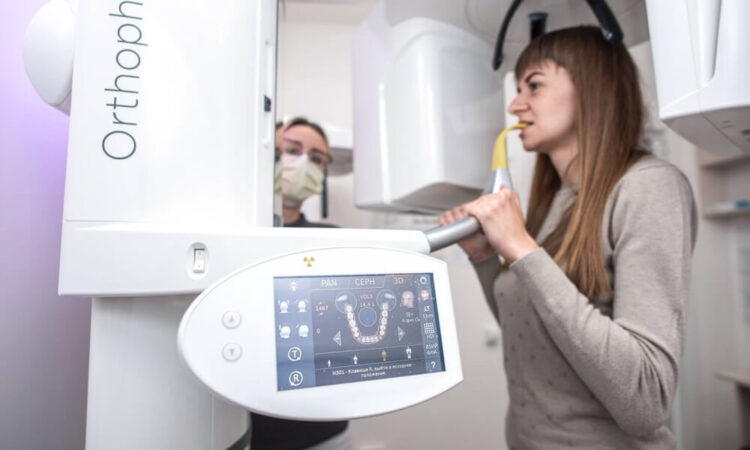
We work with Sirona AXEOS and Ortophos XL CT scanners, which provide a full 3D image of the bone. Planning is performed with consideration of the cortical layer thickness, cancellous bone density, and the location of anatomical structures.

The implant is placed not “where there is space”, but where it can function properly within the bite.

Bite overload

Even a perfectly integrated implant can lose stability due to incorrect load distribution.

We analyze the bite not only visually. The clinic uses the Zebris facebow, which makes it possible to assess lower jaw movement and contact distribution in dynamics. This helps avoid point overloads that may lead to complications over time.

Insufficient stability

Primary stability is the mechanical fixation of the implant in the bone. But this alone is not enough. It is also important to control biological stability during integration.

In addition to assessing insertion torque during placement, we use the Penguin RFA device to measure the ISQ value — a numerical implant stability index. This allows us to objectively determine whether early loading can be planned or whether it is better to give the tissues more time.

The decision is made based on measurement, not feeling.

Inaccuracy of prosthetic restoration

If the crown does not match the implant position or the bite, the load is distributed incorrectly.

We use a Primescan digital scanner and fabricate crowns on Sirona SL and X5 milling machines, which allows us to achieve high seating accuracy and minimize microgaps. Accuracy is not aesthetics. It is stability.

Ask a Question!
We will provide expert advice and help you decide

Who all-inclusive dental implant treatment is suitable for

The “all-inclusive implant treatment” format is chosen in situations where treatment includes several stages — surgery, healing, gum contouring, and prosthetic restoration — and the patient needs to understand the full scope of work, timeline, and final result from the start.

This is an approach in which the entire process is planned as one system, not as separate stages in different clinics or at different times. When implant placement and prosthetic restoration are performed within one protocol, the doctor is responsible for the implant position with consideration of the future crown, bite, and load.

This format reduces the risk of technical and biomechanical compromises that sometimes occur when the surgical and orthopedic stages are not coordinated with each other.

Ускладнення після видалення зуба

When one tooth is missing

Ускладнення після видалення зуба

When several teeth are missing

Ускладнення після видалення зуба

When a tooth is severely damaged

Ускладнення після видалення зуба

Significant tooth loss

Ускладнення після видалення зуба

After failed implant treatment

Ускладнення після видалення зуба

After periodontitis stabilization

We assess risks before treatment begins
Bruxism, premature contacts, and bone deficiency are taken into account at the diagnostic stage. This makes it possible to minimize complications years later.
Implant treatment is not the solution in every situation
If a tooth has a prognosis, we consider preserving it. An implant is not the default answer to every problem.
The surgeon and prosthodontist work together
Implant placement is planned for the future tooth. This reduces the risk of complications and ensures a stable long-term result.

When we do not recommend implant treatment

Implant treatment is not possible under all conditions or at any time. In some situations, it is more appropriate to stabilize the condition of the tissues first rather than rush into surgery. Refusing rushed decisions is not a limitation, but protection of the result. Implant treatment makes sense when the right conditions have been created. That is why the first stage is always assessment, not surgery. Here is when we may postpone implant treatment or change the plan.

Ускладнення після видалення зуба

Active periodontitis

Ускладнення після видалення зуба

Insufficient bone volume

Ускладнення після видалення зуба

Uncontrolled diabetes

Ускладнення після видалення зуба

Severe bruxism

Ускладнення після видалення зуба

Lack of hygiene

Ускладнення після видалення зуба

If the tooth can be preserved

Frequently asked questions about implant treatment

Can an implant fail to integrate?

Yes, but this happens rarely. The average success rate of osseointegration in modern implant dentistry is 95–98%.

Failures are divided into early failures (impaired osseointegration) and late failures (overload or peri-implantitis). The main risk factors are uncontrolled inflammation, implant micromovement during healing, and systemic conditions such as smoking or decompensated diabetes.

That is why the following are important:

  • CT imaging before surgery
  • implant stability control (ISQ)
  • proper selection of the loading protocol

In most cases, even if an implant is lost, repeat placement is possible after the cause has been eliminated.

Is implant placement painful?

Implant placement is performed under local anesthesia. In terms of sensation, the procedure is usually no more difficult than a planned tooth extraction.

The main discomfort is more often related not to the surgery itself, but to anxiety before it.

After surgery, swelling or moderate discomfort may occur for 1–3 days.

How long does all-inclusive implant treatment take?

Implant placement takes about 30 minutes.

The healing period averages 2–4 months in the lower jaw and 3–6 months in the upper jaw. Prosthetic restoration usually takes 1–2 days.

In some cases, immediate loading is possible — a temporary crown is placed on the day of surgery.

Can all-inclusive implant treatment be done in 1 day?

An implant and temporary crown can be placed in one visit if:

  • there is sufficient bone volume and density
  • high primary implant stability has been achieved
  • there are no active inflammatory processes

This protocol is most often used in the anterior area, where aesthetics are important. However, the decision is always made individually based on the clinical conditions.

Can implants be placed in patients with diabetes?

Yes, if glucose levels are controlled. A stable glycated hemoglobin (HbA1c) level is used as a reference point.

Uncontrolled diabetes increases the risk of impaired healing. Before implant placement, the general state of health is assessed and, if necessary, an endocrinologist is consulted.

How is an implant better than a bridge?

An implant does not require grinding down neighboring teeth and helps preserve bone volume in the area of tooth loss because it transfers load directly into the bone.

A bridge is a faster solution, but it involves intervention in healthy teeth.

The choice depends on the clinical situation and the long-term treatment strategy.

Does an implant need to be replaced after 10–15 years?

The titanium implant itself does not have a defined “service life” if there is no inflammation or overload.

Over time, the crown may need replacement due to wear, bite changes, or mechanical factors.

Regular checkups make it possible to detect problems before they become serious.

Book a consultation with a dental surgeon