

Nobel Biocare implants: history, features, and models
Nobel Biocare is one of the pioneers of modern dental implantology. The brand’s history is associated with Professor Per-Ingvar Brånemark, who in 1952 discovered the phenomenon of osseointegration and in 1965 placed one of the first titanium dental implants. In 1981, Nobelpharma was founded in Gothenburg, later becoming Nobel Biocare. The headquarters of Nobel Biocare is located in Switzerland, and the brand is part of the Envista group.
The company continues to develop solutions for implantology and implant-supported prosthetics. Nobel implants belong to the premium segment and are used in a wide range of clinical situations, including complex maxillofacial surgery cases.

Features of Nobel implants

Tapered implant shape
The tapered shape of the implant is close to the shape of a tooth root. This helps place the artificial root with less tissue trauma and preserve healthy jawbone tissue when clinical conditions allow. The taper toward the apex is designed to support the primary stability of the implant; in appropriate cases, this may allow immediate loading protocols to be used.
Grade 4 titanium
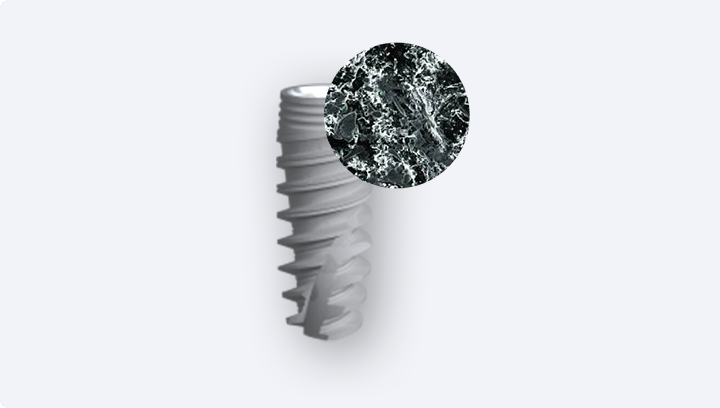
Some implant systems use titanium alloys with aluminum and vanadium, such as Grade 5. These additives increase the mechanical strength of the material; however, for some patients, the option of using implants made of commercially pure titanium is important. Nobel Biocare manufactures a range of Grade 4 titanium implants — a highly purified material that combines biocompatibility with sufficient strength for dental implantation.

TiUnite surface
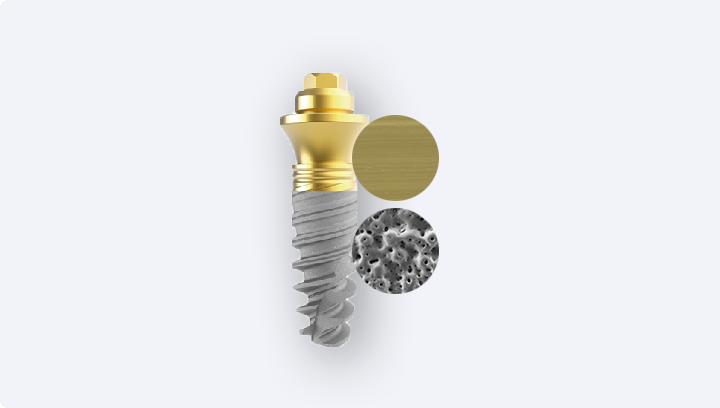
TiUnite is an anodized surface for Nobel Biocare implants, developed to support osseointegration. The implant surface is one of the factors that influences the contact between bone tissue and the implant. TiUnite has a micro-rough structure and a thickened oxide layer formed during electrochemical treatment. These properties promote stable contact between the implant and bone and may be important in immediate loading cases when appropriate clinical conditions are present.
Xeal and TiUltra surfaces
Xeal and TiUltra are Nobel Biocare surfaces introduced in 2019. TiUltra is an ultra-hydrophilic anodized implant surface with variable topography, developed to support early osseointegration and bone tissue stability. Xeal is a nanostructured anodized abutment surface designed to support soft tissue integration. When an implant with a TiUltra surface is combined with an abutment with a Xeal surface, the system is intended to support stable contact between bone and soft tissues and the components of the implant-supported restoration.

All-on-4
Nobel Biocare participated in the development of the original All-on-4 protocol together with Dr. Paulo Maló. The concept involves placing four implants for the full rehabilitation of an edentulous jaw. In patients who meet the criteria for immediate loading, a temporary fixed prosthesis can be secured on the day of surgery. The final treatment plan is determined after diagnostics, assessment of bone tissue condition, and bite evaluation.
Zygoma zygomatic implants
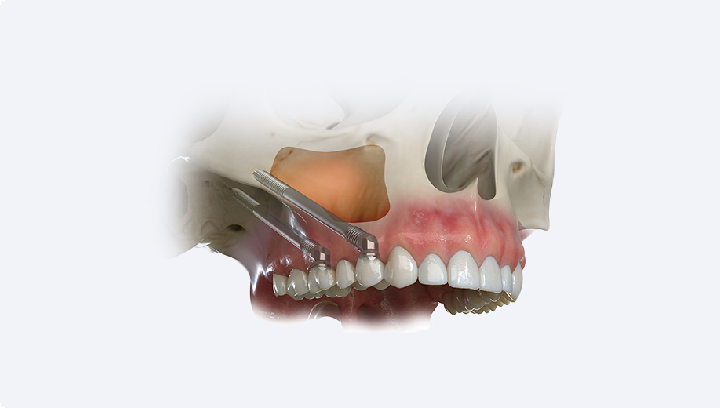
Zygoma zygomatic implants are used in complex cases of severe bone tissue atrophy in the upper jaw, when standard implant placement without prior bone grafting is impossible or unsuitable. These implants are anchored in the zygomatic bone, which in some cases makes it possible to perform rehabilitation without sinus lifting. The decision to use zygomatic implants is made only after detailed diagnostics and 3D planning.

NobelGuide
NobelGuide is a Nobel Biocare digital solution for 3D implant placement planning and fabrication of surgical guides. It helps the doctor plan implant positions more precisely, taking into account the patient’s anatomy, the future prosthetic restoration, and the amount of bone tissue. This approach is especially useful for full jaw rehabilitation, implant placement in anatomically complex areas, and bone tissue deficiency. Using a guide does not eliminate all risks, but it may reduce the likelihood of implant positioning errors.
Nobel implant models
Our clinic places NobelActive implants. This Nobel Biocare line is designed to achieve high primary stability, particularly in soft bone, extraction sockets, and aesthetically important areas. When the appropriate clinical conditions are present, NobelActive may be used for immediate implant placement, immediate loading, and full jaw rehabilitation according to All-on-4 / All-on-6 protocols.

NobelActive
NobelActive implants are available with TiUnite and TiUltra surfaces and have a thread designed to achieve high primary stability. This may be important for immediate implant placement or immediate loading. The inverted-cone neck design helps reduce load on the marginal bone and support soft tissue stability around the implant.
Possible clinical indications:
- replacement of one or several missing teeth;
- implant placement in the anterior region of the upper and lower jaws;
- implant placement in the posterior regions of the upper and lower jaws;
- cases with different bone tissue density, including soft bone;
- implant placement after tooth extraction — when appropriate conditions are present;
- immediate loading — only with sufficient primary stability;
- full jaw rehabilitation according to All-on-4 / All-on-6 protocols — when indicated;
- clinical situations where it is important to preserve the volume of bone and soft tissues.

Other Nobel implants
The Nobel Biocare range includes several implant systems that differ in shape, size, connection type, and clinical indications:
- NobelParallel — a system for replacing one or several teeth in the anterior or posterior region;
- NobelReplace — a system with a tapered implant shape used in cases where esthetics and predictable prosthetic restoration are important;
- NobelSpeedy — a line developed for protocols with high primary stability, including full jaw rehabilitation;
- Brånemark System — a classic Nobel Biocare system with a wide range of sizes for different clinical protocols;
- NobelZygoma — a zygomatic implant system for complex cases of severe atrophy of the upper jaw.
Conclusions
Nobel Biocare is one of the best-known manufacturers of dental implants and solutions for implant-supported prosthetics. The company has a long history associated with the development of osseointegration and continues to develop systems for different clinical situations.
Nobel Biocare implant systems can be used to replace a single tooth, several teeth, or for full jaw rehabilitation. The choice of a specific system depends on the condition of bone tissue, the bite, esthetic requirements, the patient’s general health, and the future prosthetic plan.
The success of implant placement depends not only on the implant brand, but also on diagnostics, 3D planning, the doctor’s experience, the quality of prosthetics, and the patient’s adherence to post-treatment recommendations. That is why the final decision about the implant type is made after consultation and examination.
Our implantologists




Patient reviews


Cost of Nobel implants
NobelParallel implant
from 32,000 UAH
Country of manufacture — USA
NobelActive implant
from 37,000 UAH
Country of manufacture — USA
What is included in the implant placement cost
CT scan, consultation, implant placement planning, the Nobel Biocare dental implant and its placement, as well as the doctor’s recommendations for the postoperative period.
Guarantees
Nobel Biocare has a warranty program for implants, the terms of which provide for product replacement in the event of certain types of implant failure. The clinic’s treatment guarantee applies provided that the patient follows the doctor’s recommendations, the check-up schedule, and hygiene rules.