

Dental treatment under general anesthesia

There are cases when dental treatment under general anesthesia has direct medical indications, is appropriate, and offers certain advantages. Below, we will explain what general anesthesia, sedation, and anesthesia are; when and for whom treatment under general anesthesia is needed; how to prepare for treatment; common myths; and frequently asked questions.

Types of anesthesia in dentistry

Local anesthesia

A specific area where treatment will be performed is numbed. The anesthetic is administered by injection using a cartridge syringe or a special indicator on an STA device. The medication blocks pain signals from reaching the brain. As a result, the brain does not perceive pain in the area affected by the anesthetic for a certain period of time. There are anesthetic medications that do not cause an allergic reaction, but in rare cases it may be impossible to select a suitable medication because of an allergic response. The doctor will then recommend another type of anesthesia. Local anesthesia can be used at any age, regardless of the type of dental treatment.n

Inhalation analgesia

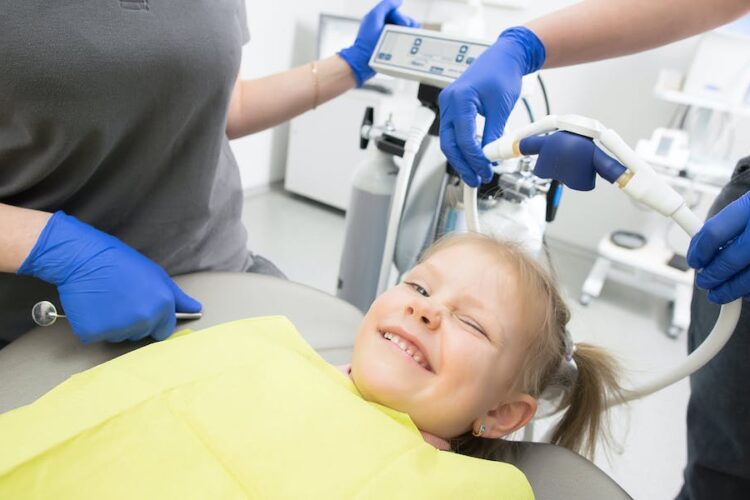
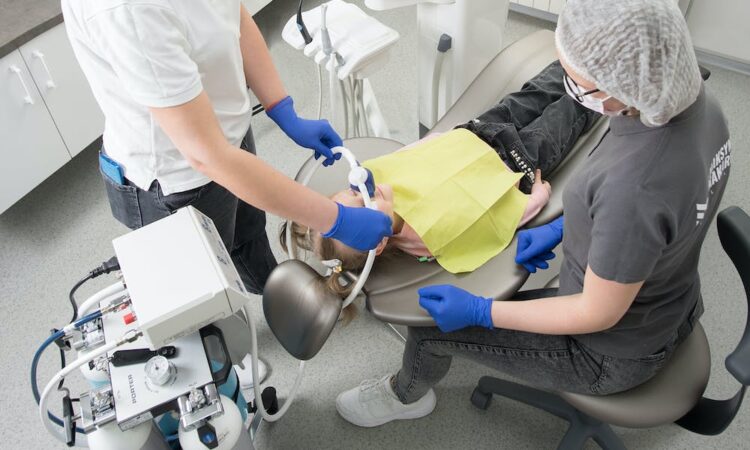
Through an inhalation nasal mask, the patient receives a mixture of oxygen and nitrous oxide (N₂O) in a safe proportion. The patient remains conscious during treatment. This technique is used to help the patient relax, is non-toxic, has a short-lasting effect, and is quickly eliminated through breathing. This method does not provide pain relief; it only helps the patient relax, after which the doctor additionally numbs the tooth locally. It can be used for both adults and children. A mandatory condition for using nitrous oxide (N₂O) in children is that they can breathe through their nose while keeping their mouth open.n

Лікування зубів під наркозом

Inhalation anesthesia (medically induced sleep)

A sedative medication is delivered into the patient’s body through an inhalation mask, after which the patient enters a state of deep sleep. Reflexes and pain signals are not suppressed, so local anesthesia is additionally used during treatment. This method is used for extensive therapeutic dental treatment in children.n

Лікування зубів під наркозом

Sedation

Sedation is a sleep-like state that the patient enters under the effects of medications administered intranasally or orally. Treatment under sedation is generally used for anxious adult patients and for short procedures.n

Лікування зубів під наркозом

General anesthesia
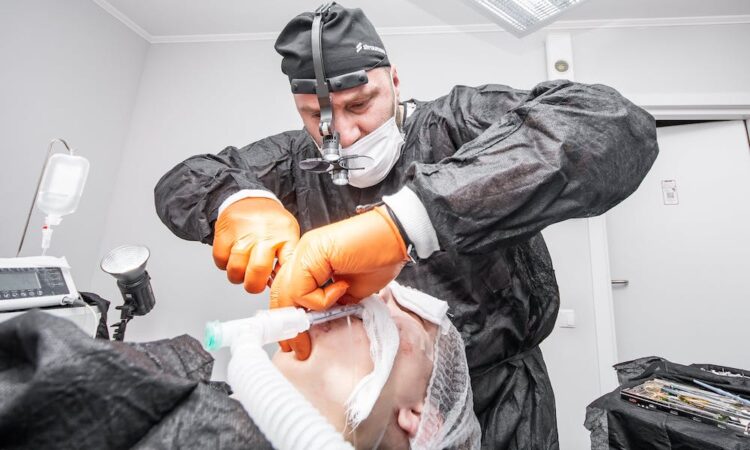
General anesthesia is a controlled, medication-induced sleep achieved by administering an intravenous anesthetic while providing artificial ventilation. During general anesthesia, the central nervous system is suppressed, consciousness is lost, and reflexes are reduced. This makes it possible to avoid stress completely during treatment, but requires an examination and appropriate medical indications. It can be used for patients of any age.
Ask a question!
We will provide professional advice and help you make a decision

How dental treatment under general anesthesia is performed

While the patient is under general anesthesia, their condition is monitored by an anesthesiologist, and in accordance with safety requirements, a critical care specialist is also present in the treatment room. In addition, vital functions are monitored using specialized equipment: a cardiac monitor for heart rhythm, blood pressure monitoring equipment, a pulse oximeter, and a ventilator.

The anesthetic is usually administered using an infusion pump, a device that delivers small doses of the medication as needed to maintain sleep. The second method is a single administration of the required dose. At our clinic, thanks to coordinated teamwork among the doctors and a clear treatment plan, the second method is used more often because the anesthesiologist can calculate the required dose precisely.

The anesthetic itself is selected individually after the doctor reviews the prescribed laboratory test results, consults with the patient, and takes the patient’s medical history.

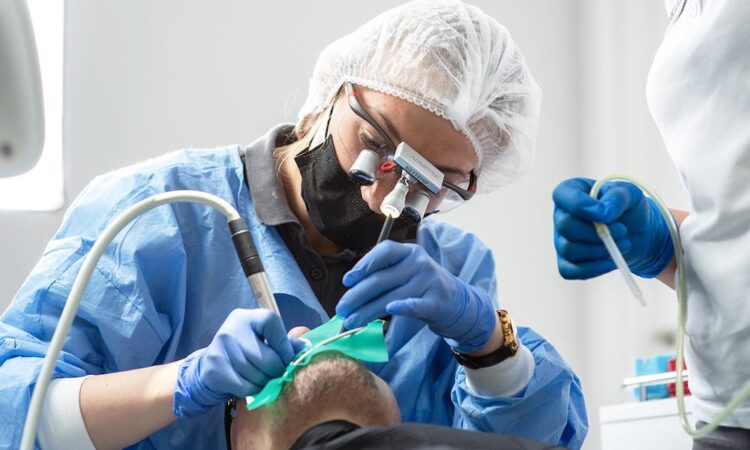
After the patient enters a state of sleep, the dentist places mouth props and performs the necessary treatment. Recovery from general anesthesia occurs gradually through metabolic processes as the medication is eliminated from the body. Antagonist medications can also be used to bring the patient out of the sleep state. With these medications, recovery from general anesthesia may be either rapid or gradual; this is controlled and determined by the anesthesiologist.

How to prepare for dental treatment under general anesthesia

Ускладнення після видалення зуба

Laboratory tests

Ускладнення після видалення зуба

Dietary restrictions

Ускладнення після видалення зуба

On the day of treatment

Ускладнення після видалення зуба

Leave your car at home

Ускладнення після видалення зуба

Arrange for assistance

Our doctors

Stages of dental treatment under general anesthesia

1 STAGE

Initial interview

After the decision to undergo dental treatment under general anesthesia has been made, an anesthesiologist will call you to take your medical history. It is important to answer their questions honestly about your health and the health of your relatives. After the interview, the doctor will determine the exact list of required laboratory tests and provide recommendations on how to prepare for treatment.
2 STAGE

Laboratory tests

You may have the tests performed at any laboratory you trust. The results are valid for 72 hours from the time they are issued.
3 STAGE

Consultation with the anesthesiologist

The consultation takes place at the clinic immediately before treatment begins. The doctor will review the test results, explain step by step how induction and recovery from general anesthesia will proceed, describe what actions are required from you, and answer all your questions.
4 STAGE

Connection to the cardiac monitor

This device helps monitor vital functions and their activity during treatment, including the heart, blood vessels, lungs, breathing rate and rhythm, body temperature, blood pressure, and blood oxygen level.
5 STAGE

Administration of the anesthetic

The anesthetic is administered intravenously, after which the patient falls asleep. For children and adults who are afraid of pain or needles, topical anesthesia is applied before the catheter is inserted into a vein to numb the puncture site.
6 STAGE

Intubation

The patient is intubated and connected to a ventilator; the procedure is performed through the larynx.
7 STAGE

Dental treatment

Once the anesthesiologist has checked all the patient’s vital signs, the dentist can begin their part of the treatment. This may involve either therapeutic dental treatment or surgery.
8 STAGE

Recovery from general anesthesia

The patient may be brought out of sedation naturally or with special medications that neutralize the effect of the anesthetic.
9 STAGE

Monitoring the patient’s condition

The patient remains at the clinic under the supervision of the anesthesia team until the doctor is satisfied with the patient’s well-being, behavior, and stable health condition. The dentist and anesthesiologist will provide recommendations within their respective areas of expertise and allow the patient to go home to rest accompanied by an adult.

Cost of anesthesia

Anesthesiologist consultation
1,500 UAH
STA anesthesia
1,200 UAH
Inhalation analgesia (nitrous oxide)
3,000 UAH/hour
General anesthesia (deep sedation)
6,000 UAH/hour

The first hour of general anesthesia is charged in full. The cost of medications is included in the service price.n

Each additional 15 minutes after a full hour of general anesthesia
2,000 UAH
Medical supervision during recovery from general anesthesia
5,000 UAH/hour

Payment

We have no hidden charges. Payment is made according to the price list and the agreed treatment plan.

You can pay in cash or by card using a bank terminal.

Treatment may also be covered as an insured event through an insurance company or under an agreement with another organization.


Clinic locations in Kyiv

Our dental clinics are most conveniently accessible from the following areas of Kyiv:

Clinic address: 25B Novomostytska St., Kyiv — Vynohradar, Kurenivka, Obolon, Syrets, Minskyi Masyv.

Clinic address: 20 Pidvysotskoho St., Kyiv — Pecherskyi District, Zvirynetska metro station.

Clinic address: 60/1 Yalynkova St., Kyiv — Kharkivskyi Masyv, Boryspilska metro station, Chervonyi Khutir, Vyrlytsia, Kharkivska.

Frequently asked questions about general anesthesia

How many years does general anesthesia take off your life?

This is a myth. General anesthesia does not affect life expectancy.

How long does it take to recover from general anesthesia?

After dental treatment, full consciousness generally returns within approximately 40 minutes.

Can you feel pain while under general anesthesia?

No, this is not possible because reflexes and nerve impulses are fully suppressed.

Is general anesthesia safe for the body?

Yes, general anesthesia is safe for the body when it is administered correctly and the dosage is monitored by doctors using specialized equipment. It acts only on the receptors it is intended to affect. The use of an infusion pump, a device that precisely controls the anesthetic dosage, prevents overdose and harm to the patient’s body.

What if I do not wake up after general anesthesia?

It is not possible to fail to wake up after general anesthesia. Cases in which a patient falls into a coma are not related to the effects of anesthetic medications on the body and occur in medical facilities of entirely different specialties, in complex clinical cases unrelated to dental treatment or dentistry.

Book a consultation with a doctor