

What is a tooth cyst?
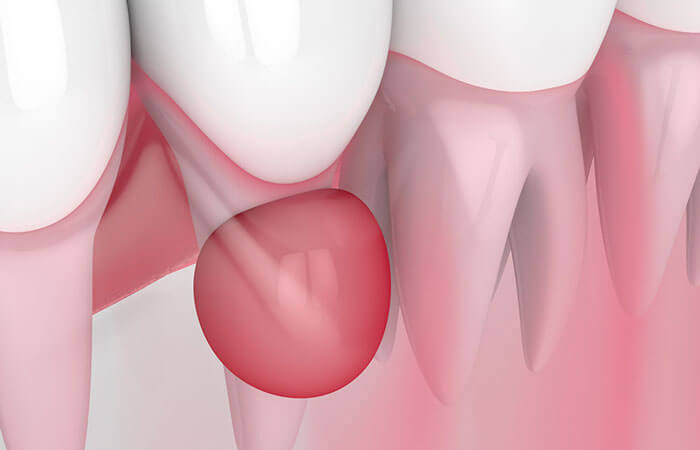
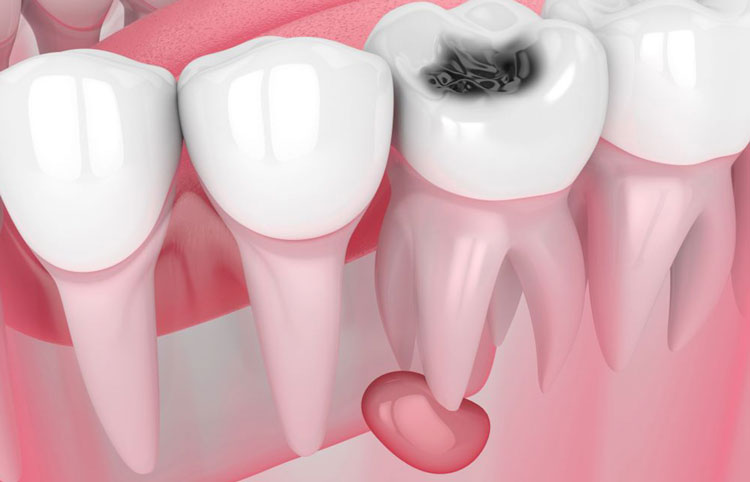
A tooth root cyst is a round, tumor-like growth attached to the root of a tooth. It has a connective tissue capsule and serous contents with cholesterol crystals and measures 5 mm or more. It results from a chronic infection caused by poor-quality root canal filling, untreated canals, or complications of caries.
A cyst is a benign growth that always requires treatment or removal. A tooth root cyst usually requires the abscess to be opened, after which antibiotic therapy may be needed to achieve long-term remission.
Causes and symptoms
A cyst forms as the body’s defensive response to infection or injury. How can you tell that a tooth cyst has formed? A cyst cannot be detected without an X-ray. See a dentist if you have the following symptoms:
Causes of a cyst:
- Jaw injuries
- Complications of caries
- Untreated or improperly treated root canals
- Root perforation
- Eruption of wisdom teeth
- Infectious ENT diseases
Main symptoms of a cyst:
- Persistent aching pain
- Sharp pain
- Severe discomfort when chewing
- Enlarged lymph nodes
- Fistula formation
- A feeling of pressure
Types of cysts by location
Lateral
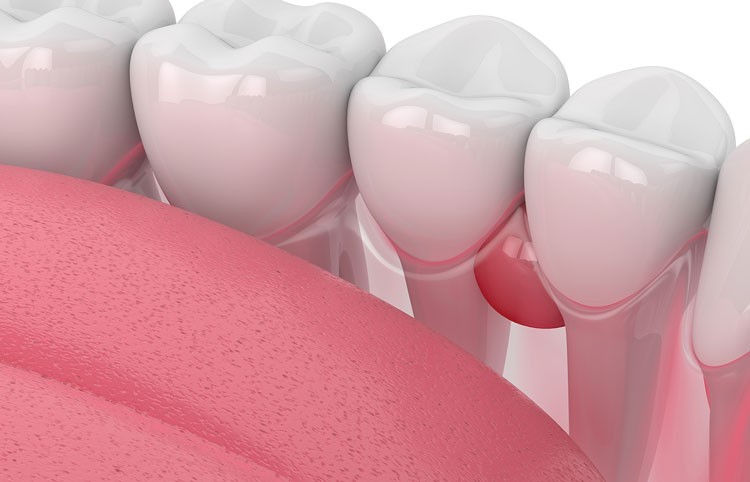
A lateral cyst is located on the side of the tooth root. As a rule, with a lateral cyst the tooth is healthy, undamaged, and has a vital pulp; the cyst itself is small and is removed by open curettage.
Apical
An apical (radicular) cyst is located at the tip (apex) of the root. It forms around the tooth root as a result of chronic inflammation. Its size ranges from 2 mm to 3 cm. As a rule, a radicular cyst develops without symptoms.
Apicolateral
An apicolateral (inter-radicular) cyst is located between the roots of a tooth when accessory canals are present.
Nasopalatine duct cyst
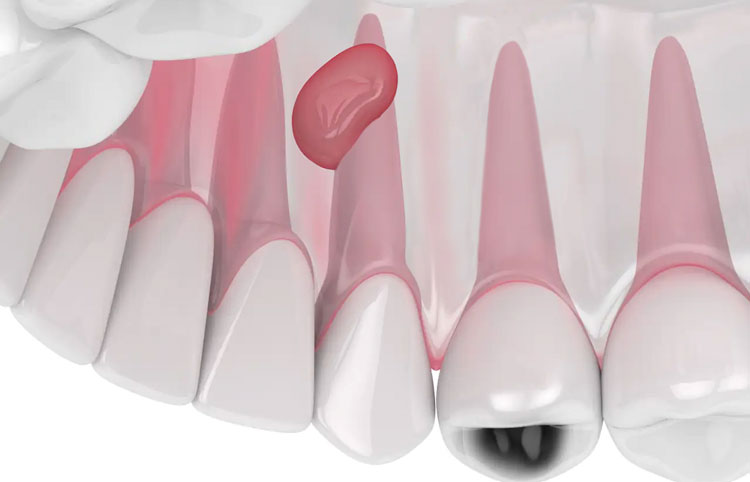
It is located in the upper jaw in the incisor area, on the roots of the incisors. It forms from remnants of the nasopalatine duct epithelium.
Tooth cyst removal methods

Cystotomy
Cystotomy is a tooth-preserving surgery in which only part of the growth (its front wall) is removed together with the affected segment of the tooth root. The remaining capsule is joined with the surrounding tissues and drained with an iodoform gauze strip.

Hemisection
Hemisection is a tooth-preserving surgery in which the growth is removed together with the affected root of a multi-rooted tooth and the attached segment of the crown. The tooth remains functional and is covered with a crown.

Cystectomy
Cystectomy is a tooth-preserving surgery in which the growth is removed completely, together with its capsule and the affected tooth root.

Resection
Root-end resection is a tooth-preserving surgery in which the infected tip of the tooth root is removed together with the growth.

Coronoradicular separation
Coronoradicular separation is a tooth-preserving surgery in which a growth between the roots of a multi-rooted tooth is removed by dividing the entire tooth, including the crown, into two separate single-rooted teeth. The tooth remains functional.
Stages of tooth cyst removal
Examination and diagnosis
Professional teeth cleaning
Treatment of adjacent teeth
Endodontic treatment
Anesthesia
Surgery
Suturing the socket
Supportive therapy
Histopathological analysis
Follow-up X-ray
Possible complications after surgery

Pain
During the first 2–3 days after surgery, you may have mild pain similar to that of a bruise. This is normal: it is caused by trauma to the mucosa and goes away on its own. You may take painkillers after checking with your doctor first. If the pain does not subside by the fourth day, or if it is acute and sharp, see your doctor.

Infection
If you notice a taste of pus or bad breath, an infection has most likely developed — see your doctor urgently. The most common causes of infection are failure to maintain sterility in the operating room and poor oral hygiene. To reduce the risk, choose a clinic that complies with the standards of the Ministry of Health of Ukraine, and follow all of your doctor’s recommendations and prescriptions.

Soft tissue swelling
Swelling after cyst removal is normal and subsides naturally. It peaks on the third day and then goes down. If the swelling increases on the fourth day after surgery, this is not normal — see your doctor for an examination immediately.

Fever
This is normal as long as your temperature does not exceed 38 °C and the fever lasts no longer than 2 days. Your temperature usually rises in the afternoon or evening. If it is above 38 °C, lasts all day, or persists for more than two days, see your doctor.

Recurrence
If the doctor does not completely remove the infected areas during surgery, the growth may recur. In this case, repeat surgery will be needed to remove additional affected tooth tissue, or possibly the entire tooth.
Our doctors
Maksym Makarenko
Svitlana Kovalenko
Roman Mamonov
Yevhen Makarenko
Maryna Mamonova
Lidiia Bulyhina
Cost of cyst removal
Cystectomy
from 9,000 UAH
Tooth cyst removal
from 11,500 UAH
Payment
We have no hidden fees. Payment is made according to the price list and the agreed treatment plan.
You can pay in cash or by card (via a bank terminal).
Treatment can also be covered by your insurance company or provided under a corporate agreement.
Frequently asked questions about tooth cyst removal
What happens if a cyst is not removed and it ruptures?
A cyst can rupture during a flare-up (for example, of periostitis), and this condition is too serious to sit out at home without doing anything.
If flare-ups recur often, a fistula tract forms through which pus drains. In this case, surgery will still be needed, but it will be more complex and more traumatic.
If I have a tooth cyst, is the tooth removed along with it?
No, not always. Besides conservative treatment of cysts, there are tooth-preserving surgeries, such as:
- cystectomy
- cystotomy
- coronoradicular separation
- root amputation.
Tooth-preserving surgeries are those after which the tooth remains functional.
How long does recovery take after tooth cyst removal?
Sutures are removed 7–10 days after surgery; by then, any unpleasant symptoms have subsided. Complete tissue healing takes 3–4 months.
Can a tooth cyst resolve on its own?
No, cysts do not go away on their own, but there are treatment methods that do not require surgery.