Implant placement and prosthetics with “zirconia” crowns

Maksym Makarenko

Максим Макаренко Specializes in: surgery, implant placement, and dental prosthetics

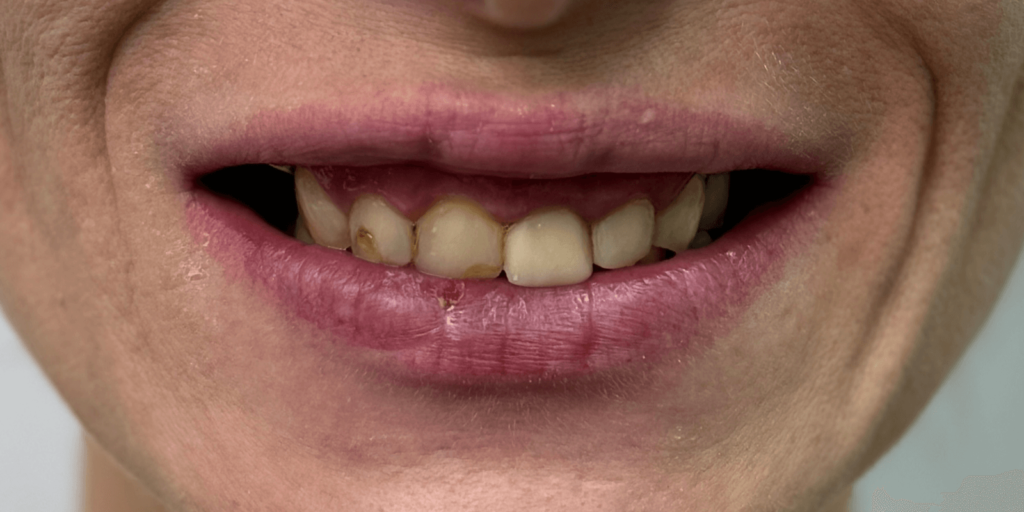
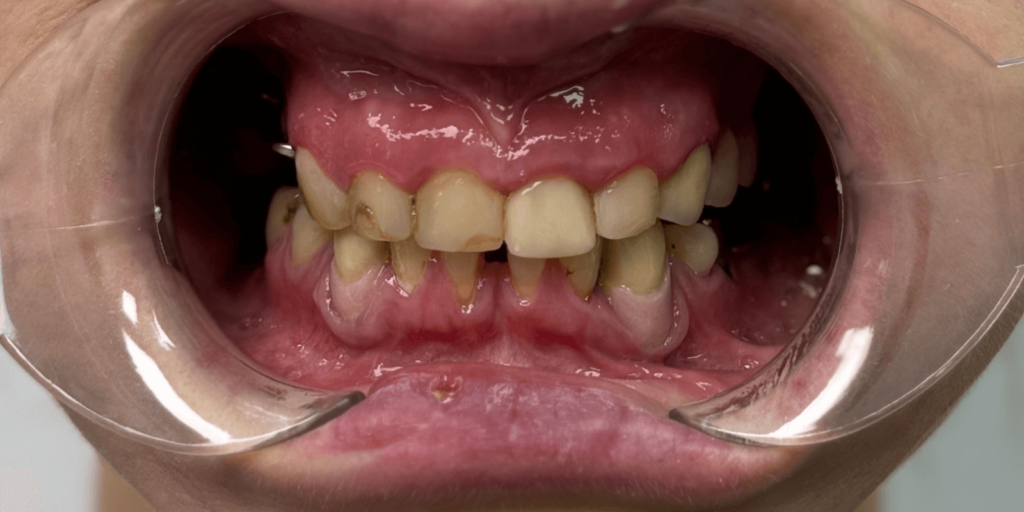
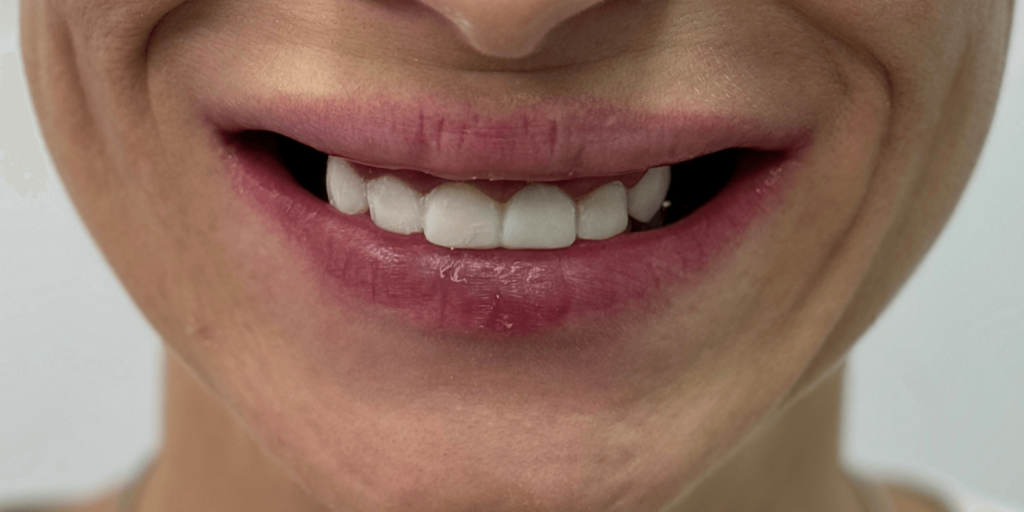
A woman came to our clinic with years of tiredness in her eyes. She could not chew food properly, felt embarrassed about her smile, and constantly, almost unconsciously, hid her face while speaking. She was concerned not only about aesthetic problems — missing teeth, old bridge-like prostheses, darkened fillings — but also about functional discomfort that reminded her of itself every day. During the initial visual examination, the doctor observed:

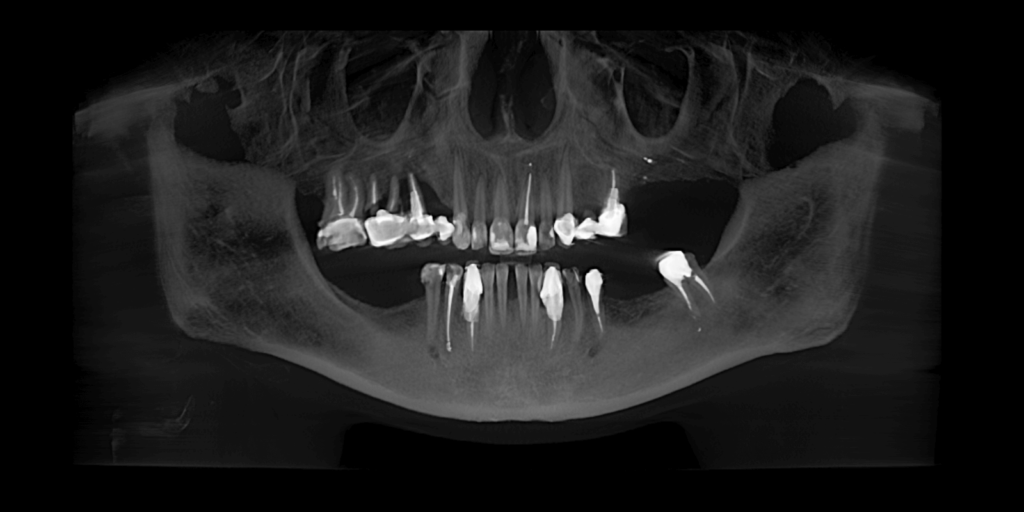
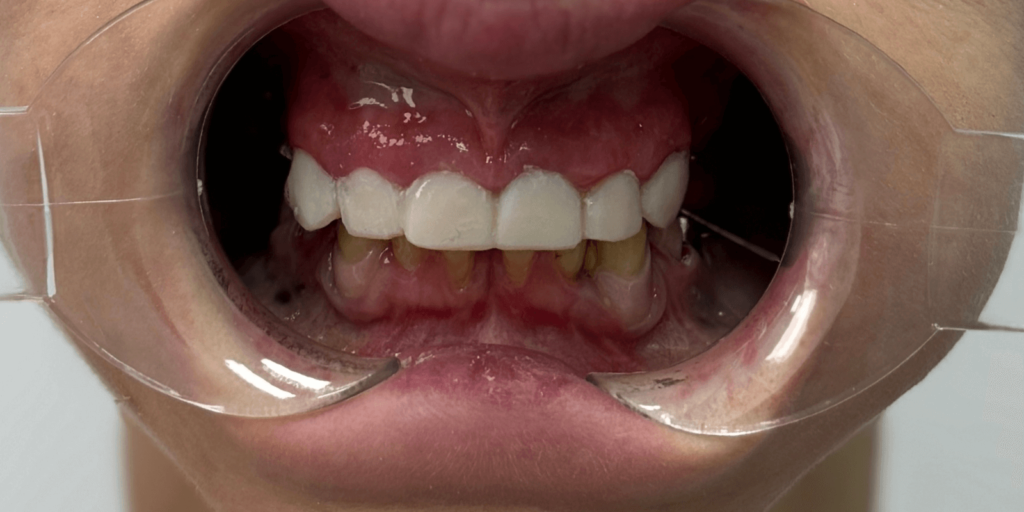
  • In the upper jaw: 5 anterior teeth covered with restorative fillings; a metal-ceramic bridge-like prosthesis placed in the area of teeth 2.3-2.5; 5 teeth missing. A bridge-like prosthesis was placed in the area of teeth 1.4, 1.5, and 1.6, supported by teeth 1.5 and 1.6. Tooth 1.7 was covered with a metal-ceramic crown.
  • In the lower jaw, 5 teeth were missing; the anterior teeth had a large diastema between them; teeth 4.3 and 3.3 were covered with metal-ceramic crowns; large root posts were placed in teeth 3.4, 3.5, and 3.8.

After the examination, the doctor referred the patient for a 3D CT scan of both jaws to fully assess the condition of the teeth and propose a well-grounded treatment plan. The CT scan revealed a fracture of the tooth roots under the bridge-like prosthesis on teeth 1.4-1.6.

Based on the patient’s wishes and the diagnostic findings, the doctor proposed the following treatment plan:

  • Remove fractured teeth 1.5 and 1.6 (under the bridge-like prosthesis).
  • Perform bone tissue augmentation at the same time as the extraction.
  • Carry out delayed implant surgery in the area of teeth 1.4 and 1.6.
  • In a one-stage procedure, place dental implants in the area of teeth 2.6, 3.6, 4.6, and 4.7.
  • Raise the bite using a prosthetic approach to prevent further destruction of the dentition and to reduce the load on the joints.

At that point, the patient agreed, and our team began treatment, which consisted of the following stages:

STAGE 1

Professional oral hygiene

Before starting treatment, we always perform professional oral hygiene, especially before surgical intervention.
STAGE 2

Surgical stage

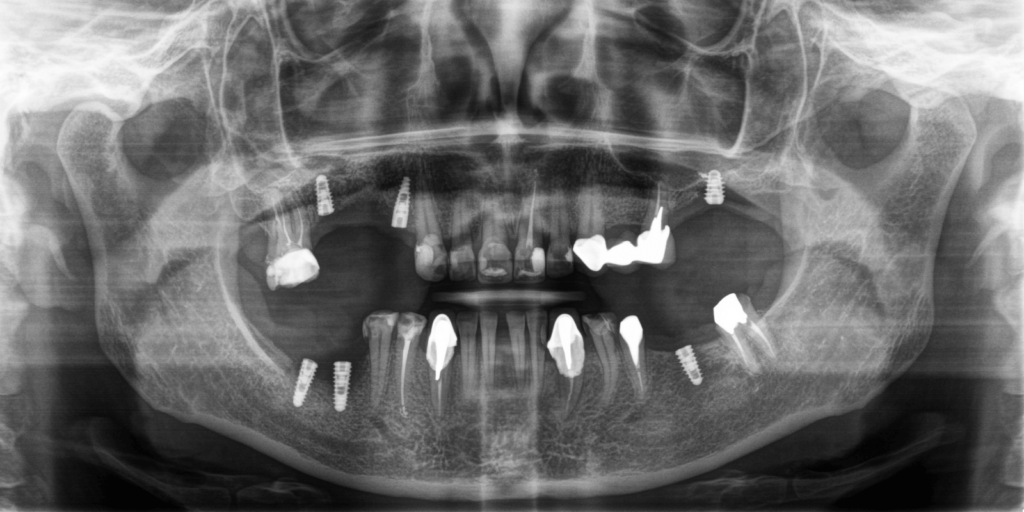
In one visit, the patient had teeth removed, underwent bone tissue augmentation, and had 4 implants placed.
STAGE 3

Surgical stage

Three months later, the volume of bone tissue was sufficient for implant surgery, and the doctor placed two more dental implants. After implantation, the patient did not attend appointments for 2.5 years, and the previous treatment plan had to be adjusted due to changes in the overall situation in the oral cavity.
STAGE 4

Restoration. Placement of gingiva formers

The patient developed a chip on anterior tooth 2.1, and it was this problem that brought her back to our clinic to have the tooth restored. The doctor restored the shape and function of the tooth with composite material. In addition, gingiva formers were placed in the area of the previously installed dental implants. After this, the patient again did not attend appointments for some time, until the situation with a chipped tooth happened again. The doctor then explained the importance of prosthetics and bite raising, demonstrated examples of overload on dental models, and only after this appointment were we able to continue and complete the treatment.
STAGE 5

Scanning

The doctor performed a digital scan of the jaws to create a mock-up model. At this stage, the patient refused to change the canines and anterior teeth of the lower jaw, so the doctor had to take this into account when creating the model. In addition, during this time tooth 3.8 had been damaged (a broken root) and therefore had to be extracted. The patient was fully informed about the importance of following the proposed treatment approach and raising the bite.
STAGE 6

Try-in of the tooth model

A model of the future teeth was made in our own laboratory, and the doctor transferred the model into the oral cavity so the patient could see the future result. After the model try-in, the decision was made to fully restore the upper jaw with crowns and bridge-like prostheses, restore the lower jaw (except for the 6 anterior teeth), and raise the bite.
STAGE 7

Preparation for prosthetics

During the same visit as the model try-in, the doctor removed the old bridge-like prosthesis and prepared the abutment teeth. The mock-up model served as temporary restorations for the patient so as not to affect her quality of life while the permanent prosthetic structures were being made.
STAGE 8

Fixation of crowns

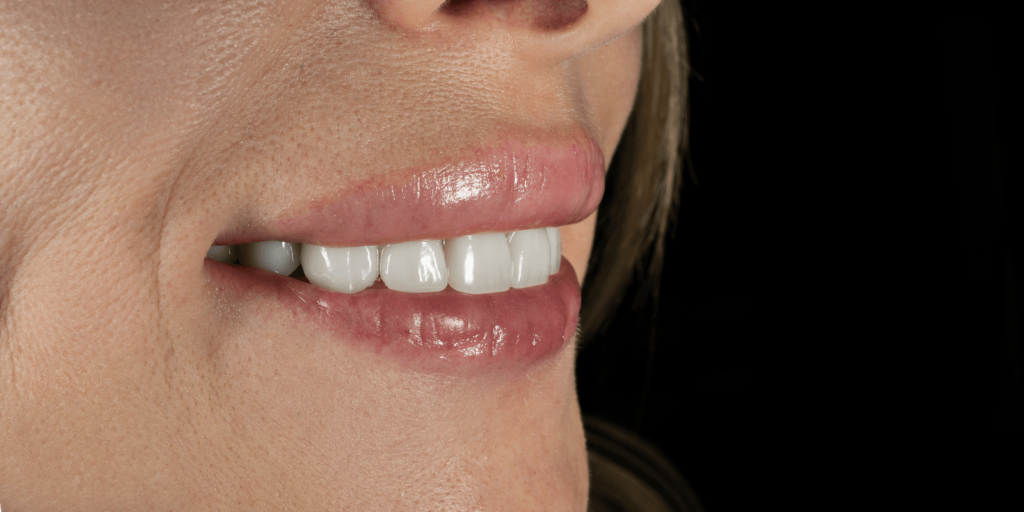
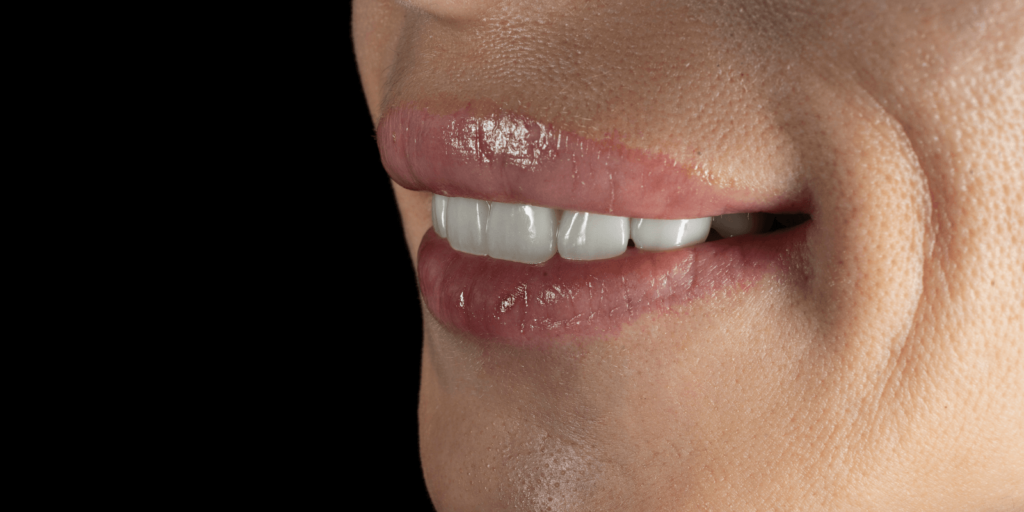
One week later, the temporary teeth were removed, and zirconia crowns and bridge-like prostheses were placed.

Summary

We did not simply treat the teeth. We rebuilt the smile piece by piece, like a mosaic — with patience, care, and professionalism. The woman who once felt afraid to speak openly now laughs with confidence. She returned not only to the doctor — she returned to herself.

And we sincerely hope that this time she will come not because of chips, but simply for prevention, with a cup of coffee in her hand and a calm smile on her face. Because these are exactly the stories we work for.

☝🏻 Want the same? Write to us — we will explain where to start and choose a treatment plan that fits your time and possibilities. Or call us.

    Schedule a Consultation with Maksym Makarenko

    Enter your phone number, and we will call you back to schedule a convenient appointment.

    dentist Maksym Makarenko

    Or call us

    097 332-4-999


    Максим Макаренко

    Maksym Makarenko

    Oral surgeon. Clinical experience: 23 years. Doctor of Sciences.