Specializes in: surgery, implant placement, and dental prosthetics
Patient Oleksii came to us. He was concerned that he could not chew properly: in the upper jaw, on both sides, there were old bridge-like prosthetic structures that were no longer functioning; tooth 37 was missing in the lower jaw, and teeth 46 and 47 were covered with old metal-ceramic crowns. Because the posterior chewing group had not been functioning properly for a long time, the load had redistributed to the front teeth — significant wear developed, and restorations in the anterior area began to break down.
We proposed the following treatment plan to the patient:
fabricate permanent restorations for all teeth in both jaws — from zirconia dioxide and e.max ceramic, depending on the tooth position, in Bleach 2–3 shade.
The treatment consisted of the following stages:
STAGE 1
Examination. Treatment plan
During the first visit, we performed computed tomography and assessed the volume and density of the bone tissue — in particular, whether it was sufficient for implant placement — and also checked the condition of the abutment teeth under the old prosthetic structures. We performed a digital scan of the dental arches and created a digital mock-up of both jaws to plan the shape and size of the future restorations. We also took the patient's general health into account: the patient was taking blood-thinning medications, so before the surgical stage we coordinated a temporary discontinuation of these medications with his physician — this reduces the risk of bleeding during surgery.
STAGE 2
Professional oral hygiene
Before starting treatment, we performed professional oral hygiene — a mandatory stage before implant placement and prosthetic treatment.
STAGE 3
Surgical stage and temporary crowns
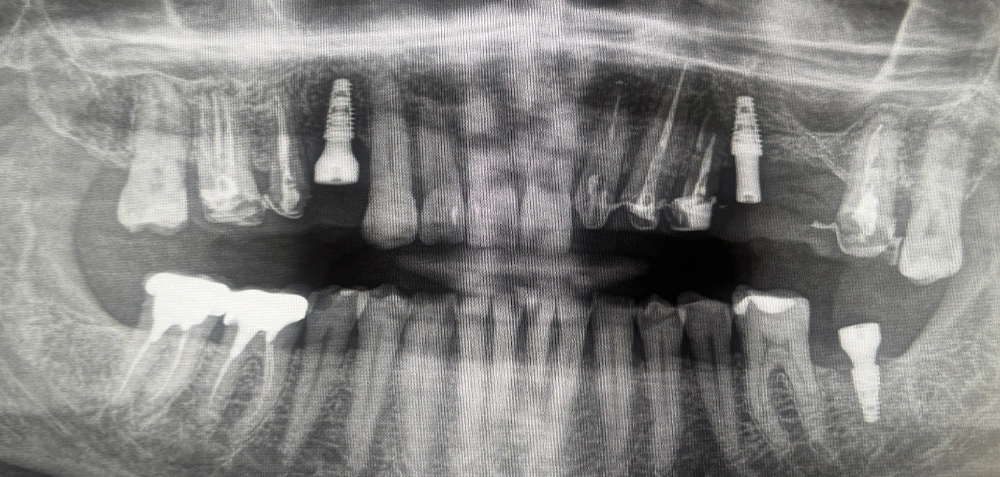
We removed the old bridge-like prosthetic structures and placed three Neodent Helix implants in positions 14, 25, and 37. Immediately after placement, we performed a digital scan and fixed temporary crowns on the implants — the immediate loading technique allowed the patient to go through the integration period comfortably. The control OPG confirmed the correct position of all three implants (the temporary crowns are not visible on the image because they are not radiopaque).
STAGE 4
Secondary endodontic treatment
Two months later, after the implants had integrated, we retreated the root canals of eight abutment teeth — 16, 15, 23, 24, 22, 27, 46, and 47.
STAGE 5
Mock-up try-in
Using a mock-up, we transferred the planned shape of the future teeth into the oral cavity and agreed with the patient on the shape and size of the restorations before tooth preparation.
STAGE 6
Preparation. Temporary crowns
We prepared the teeth for prosthetic treatment, performed a digital scan, and fixed new temporary crowns for the period while the permanent structures were being fabricated.
STAGE 7
Fixation of permanent restorations
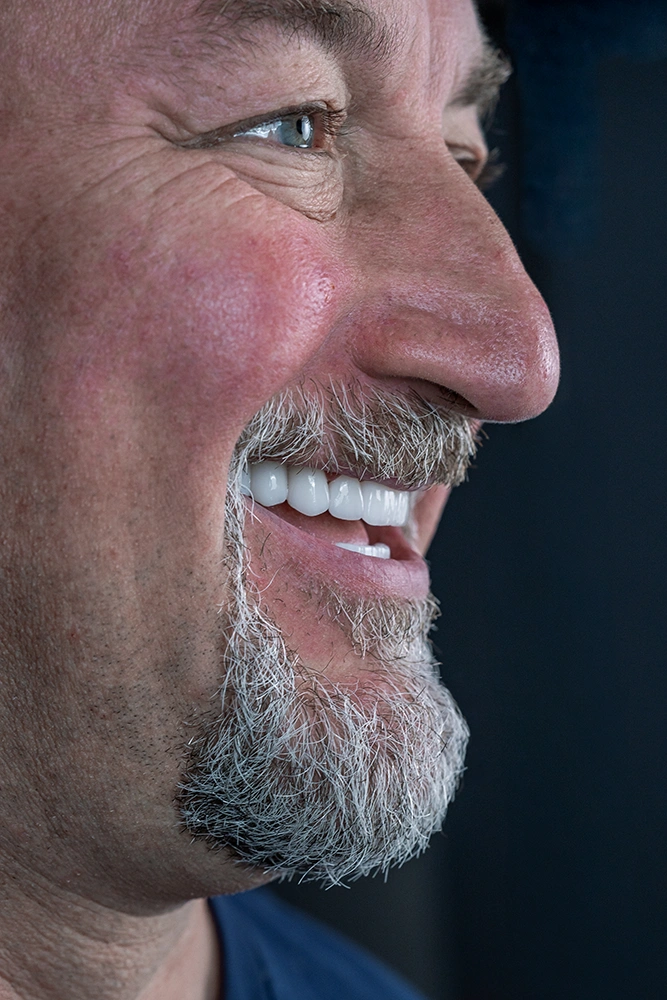
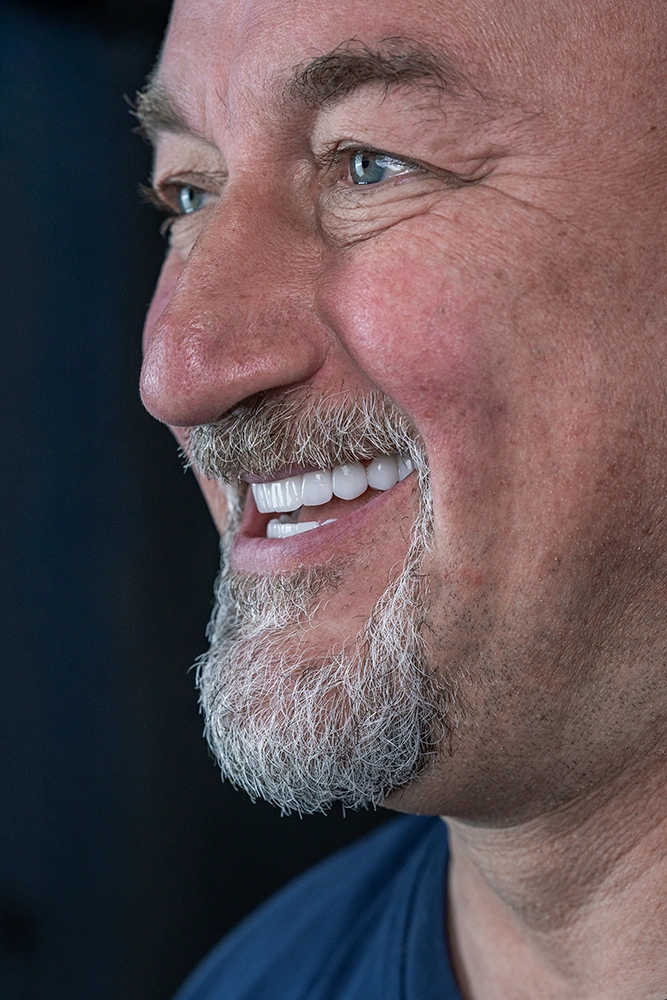
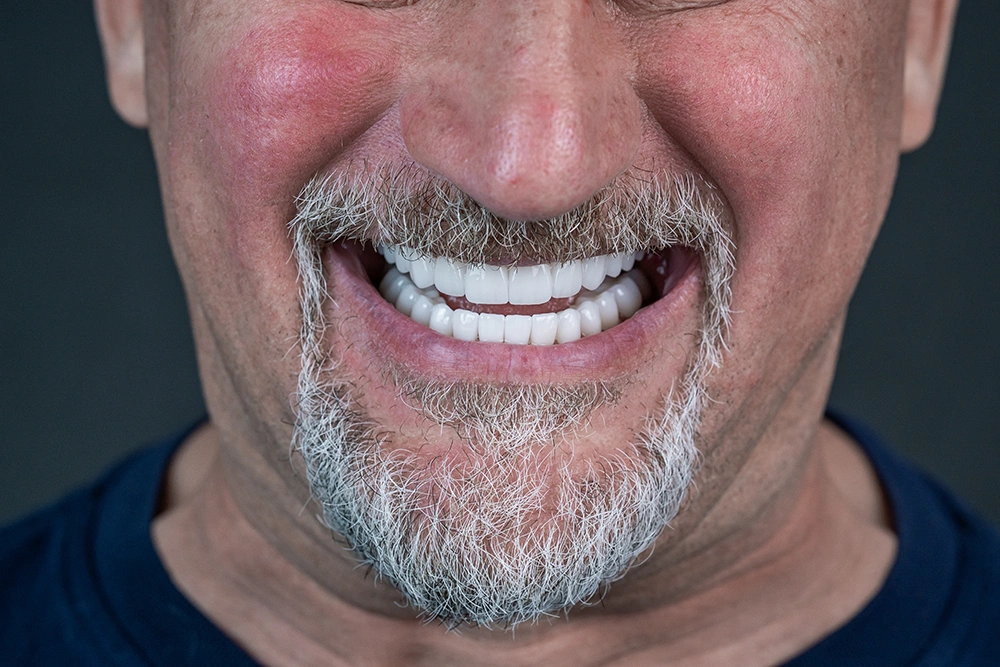
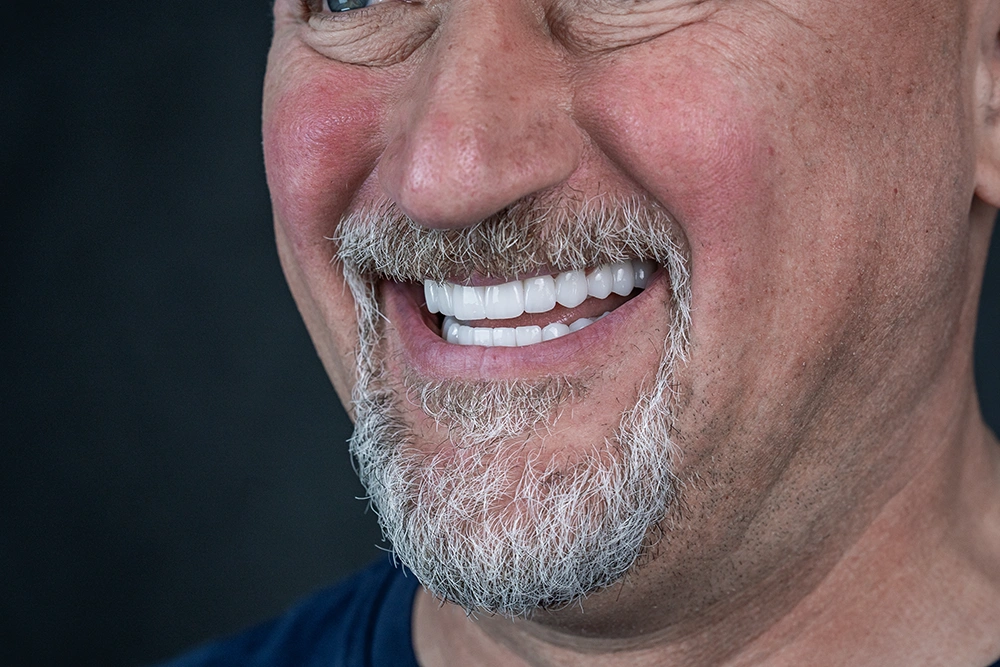
Ten days later, we removed the temporary structures and placed the permanent ones. The new crowns covered not only the chewing group: ultimately, all teeth in both jaws received new ceramic restorations — zirconia dioxide and e.max, depending on the tooth position — with a unified shape, Bleach 2–3 shade, and proper contacts.
Treatment summary
We restored chewing function, eliminated the consequences of pathological wear, restored even load distribution, and brought back the natural aesthetics of the smile. The patient is satisfied with both the functional and aesthetic result.