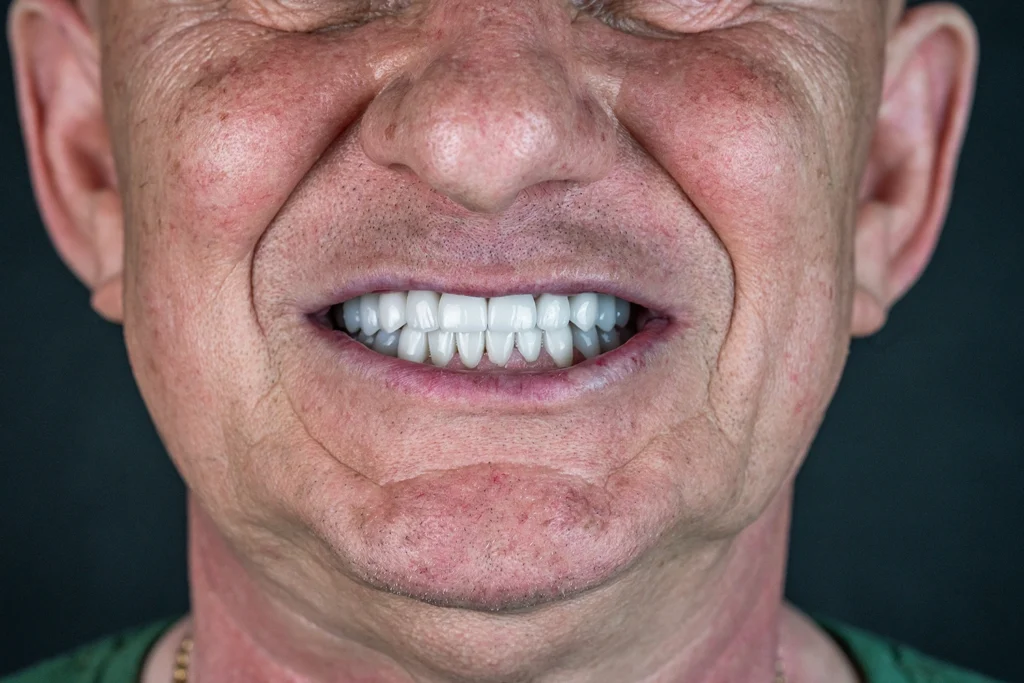
A 62-year-old patient came to us. He was bothered by a broken bridge on the right side that made chewing difficult, pain in the lower right jaw area and a broken front tooth. His other prosthetic restorations had also been placed long ago and no longer provided proper function or comfort.
We proposed the following treatment plan:
- perform professional hygiene of the oral cavity;
- remove the old bridges;
- place four Alpha Dent implants in positions 14, 16, 24 and 26;
- carry out root canal retreatment of the teeth that required it;
- plan the future smile using a digital mock-up;
- restore the anterior group with veneers and a crown on the broken tooth;
- fabricate new bridges supported by implants.
The treatment consisted of the following stages:
1 ЕТАП
Examination. Treatment plan
We performed a CT scan and a full examination of the oral cavity. It revealed significant wear of the teeth in both jaws: due to overload of the anterior group, the old restorations were gradually losing strength and some teeth were chipping. The cause of pain in the lower right area was periodontitis of tooth 47 under the old restoration, while the bridge in that area had lost its fixation. We therefore recommended not simply replacing the damaged restorations but eliminating the cause of their failure — restoring the correct distribution of the chewing load.
2 ЕТАП
Professional hygiene. Surgical stage
During the first treatment visit we performed professional hygiene, removed the old bridges and placed four Alpha Dent implants in positions 14, 16, 24 and 26.
3 ЕТАП
Endodontic retreatment
A week later we retreated the root canals of the teeth that required it — in particular tooth 47, where periodontitis had developed.
4 ЕТАП
Digital smile design (mock-up)
We scanned the upper and lower jaws and created a mock-up of the future smile. This allowed us to assess the shape of the teeth, check the bite and show the patient the future result even before the prosthetic stage began.
5 ЕТАП
Prosthetic stage
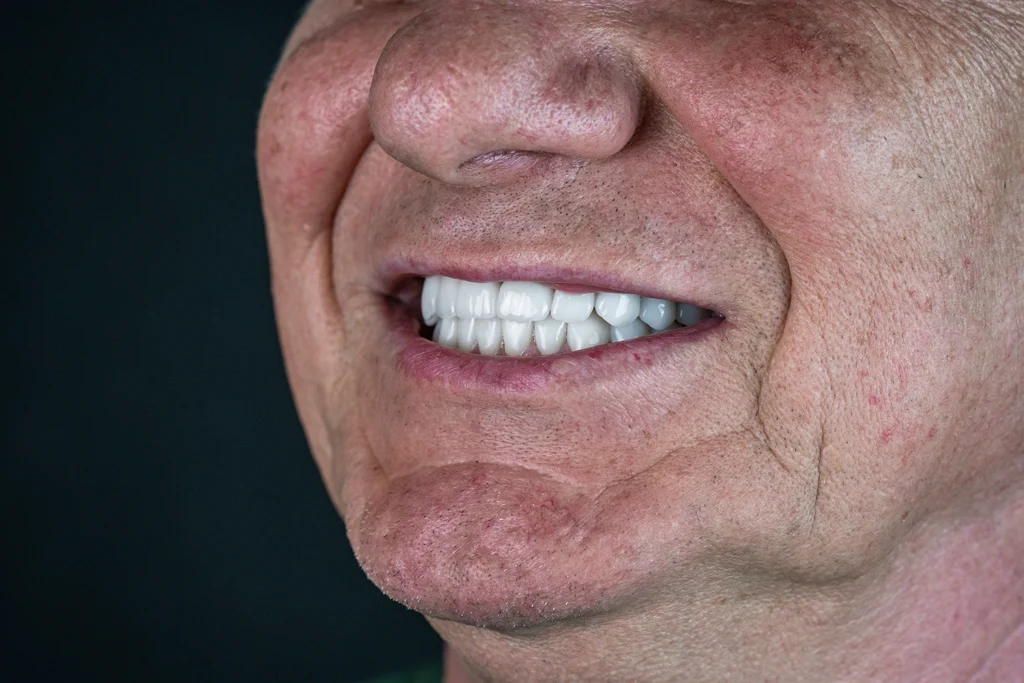
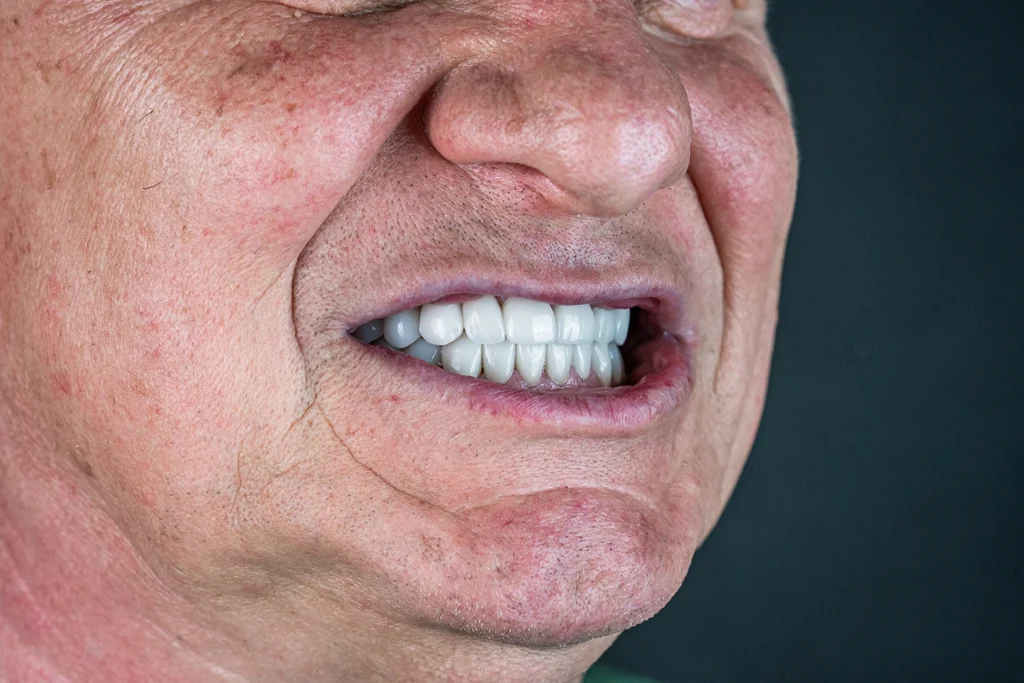
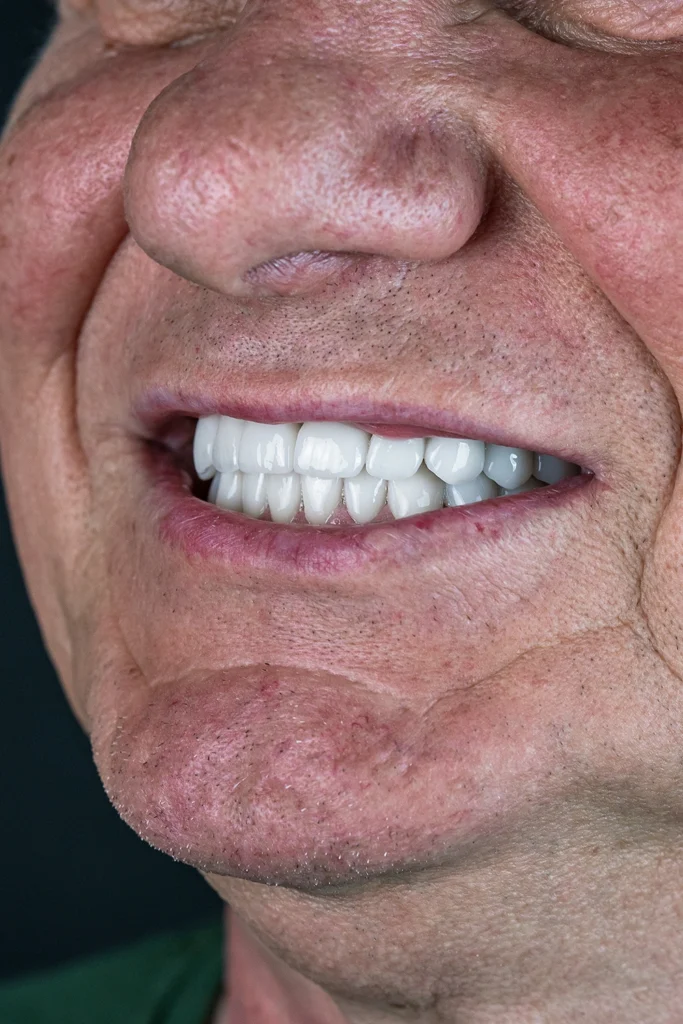
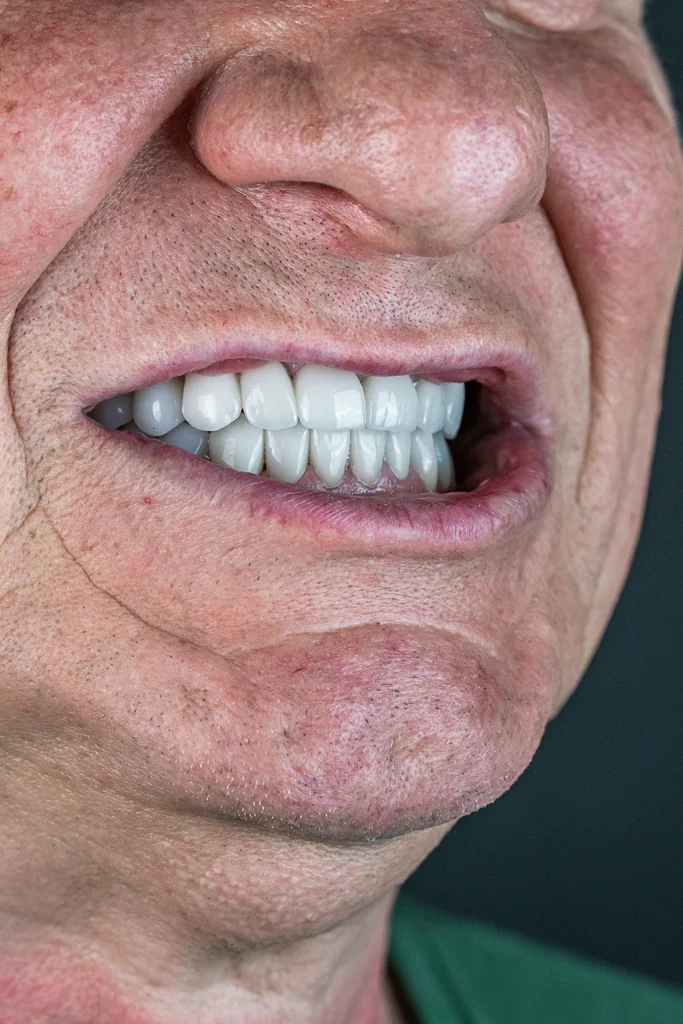
Two and a half months later, after the implants had integrated, we placed the gum formers. We then transferred the mock-up into the mouth and prepared the teeth for prosthetics. For the anterior group we made ceramic veneers and a crown for the broken front tooth; for the chewing sections of the upper jaw — implant-supported bridges; and for tooth 47, after endodontic treatment, a separate crown. The material of each restoration was chosen individually — zirconium dioxide or e.max ceramic, depending on the tooth. The shade was selected together with the patient — Bleach 3.
6 ЕТАП
Fixation of permanent restorations
We fixed all the restorations: veneers and a crown in the anterior area, implant-supported bridges in the lateral sections of the upper jaw, and a crown on tooth 47.
Treatment outcome
The treatment fully restored chewing function, eliminated the source of pain, stabilised the bite and brought back the natural aesthetics of the smile. The patient no longer feels discomfort while chewing, and the new restorations distribute the load evenly.